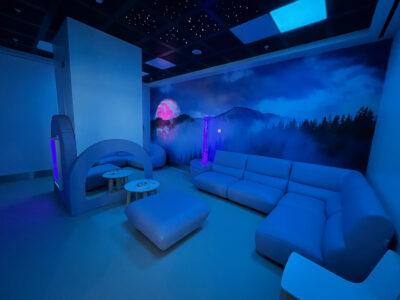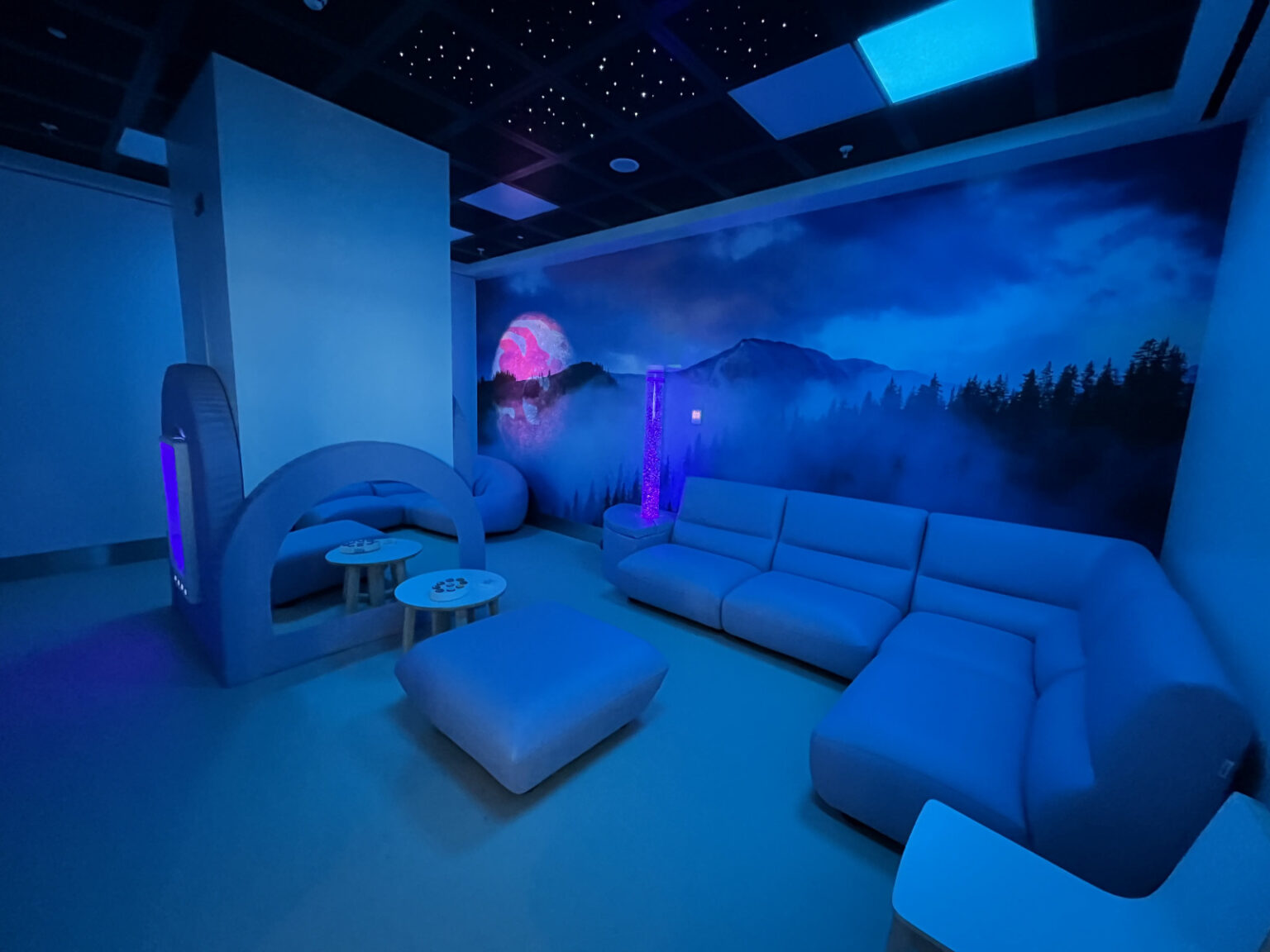

Manchester Airport has opened a new sensory facility in Terminal 2, giving passengers a place to manage sensory input or take a quiet break before their flights. The Sunflower Room is designed to support autistic and other neurodivergent passengers, as well as travellers with non-visible disabilities and additional assistance needs.
The facility has three separate spaces: two interactive sensory rooms and a quiet room with comfortable seating, low-level lighting and minimal stimuli. Passengers can use the rooms without booking in advance.
Interactive Features and a Quiet Retreat
The two sensory rooms feature bubble tubes, infinity mirrors, light projectors and lighting with adjustable brightness and colour. Weighted and padded furniture gives passengers options to sit, stand or lie down, depending on their needs.
The separate quiet room offers a calmer environment for those who prefer less stimulation. Flight information screens at the entrance allow users to check updates while spending time away from the main terminal.
“Whether you’re looking to relax, reduce sensory input, or simply recharge, these spaces are available for you to use and do not need to be pre-booked,” said Ed Kibblewhite, Head of Terminal Services at Manchester Airport.
The opening forms part of Terminal 2’s decade-long transformation, which the airport says is nearing completion.
Designed with Input from Disabled Travellers
Yorkshire-based sensory specialist AmbiSpace designed the facility, with input from the National Autistic Society, special assistance provider ABM and the Manchester Airport Disability Forum.
The forum brings together airport users with disabilities and restricted mobility to advise management on accessibility and assistance services. AmbiSpace will also maintain and manage the new facility.
Consultation focused on providing distinct environments to accommodate different sensory preferences, rather than assuming all passengers would benefit from the same features.
“From the beginning we were clear about the need for different spaces. Every autistic person is different; some people find lights and bubbles regulating, some need movement, while others just need a quiet space to sit. By offering three distinct, private spaces, Manchester Airport is supporting passengers to feel calm and regulate before their flight,” said Emma Roberts, a Greater Manchester-based Project Officer for the National Autistic Society.
Roberts, who helped with the consultation, said the facility could become part of a familiar travel routine for autistic passengers and their companions, helping them plan journeys with greater confidence.
For ABM’s assistance teams, the rooms provide another option when adapting support to individual travellers.
“It is about making sure we are not just getting passengers from A to B but helping them travel in a way that works best for them,” said Anwar Hussain, ABM’s Contract Manager.