
Changi Airport has started deploying autonomous wheelchairs for passengers with reduced mobility (PRMs), becoming one of the first major airports to introduce the technology as part of its day-to-day passenger assistance services.
Developed in partnership with ground handling provider SATS, the autonomous wheelchairs are now being rolled out across Terminals 2 and 3 following a successful trial programme that saw more than 13,000 passengers use the service.
The initiative is designed to improve accessibility while helping airport staff manage a growing demand for mobility assistance.
Supporting a Growing Number of Passengers
Requests for wheelchair assistance at Changi Airport increased by 20% between 2023 and 2025, reflecting both rising passenger numbers and an ageing travelling population.
Airport officials say autonomous wheelchairs will complement existing assistance services rather than replace them. By handling suitable journeys independently, the technology allows frontline staff to spend more time assisting passengers who require higher levels of care.
During the initial rollout, the autonomous fleet is expected to handle around 10% of Changi Airport’s daily mobility assistance requests.
How the Autonomous Wheelchairs Work
The wheelchairs operate along predefined routes within departure transit areas using sensors that detect obstacles and navigate around pedestrian traffic.
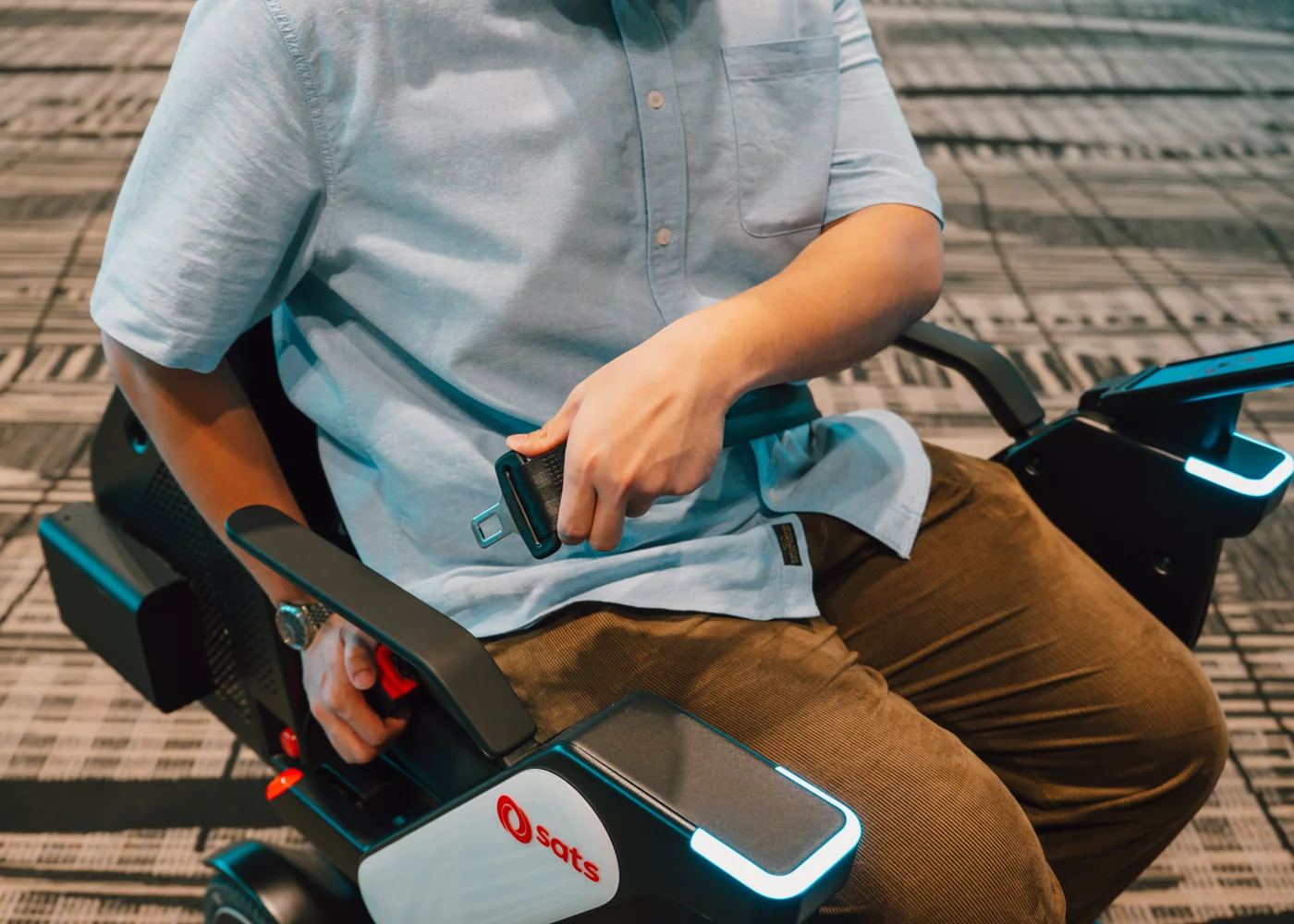
Each journey is supervised remotely by a SATS operations team, while several built-in safety features are designed to ensure safe operation throughout the trip. These include seatbelt monitoring, an emergency stop button, an assistance call function and a rear storage basket for cabin-size luggage.
The wheelchairs also use omni-directional wheels, allowing them to manoeuvre smoothly through busy terminal environments.
Successful Trials Paved the Way
Passenger trials first began in Terminal 3 in March 2025 before expanding to Terminal 2.
More than 13,000 passengers participated during the testing phase. The programme was available to selected travellers who required wheelchair assistance but were able to walk short distances independently, with trained staff remaining available throughout the journey whenever needed.
Before introducing the service, Changi Airport Group and SATS carried out extensive testing covering navigation, obstacle detection, passenger comfort, speed control and overall operational safety. The airport operator also evaluated similar technologies used at airports in other countries before proceeding with deployment.
Part of a Broader Accessibility Strategy
The autonomous wheelchair programme forms part of SATS’ “Hub Handler of the Future” initiative, which focuses on using automation to improve airport operations while supporting frontline teams.
For Changi Airport, the rollout represents another step in expanding accessible travel services as passenger numbers continue to grow. The airport says the technology will help deliver a more seamless experience for passengers with reduced mobility while making assistance services more efficient and sustainable over the long term.