
Description:
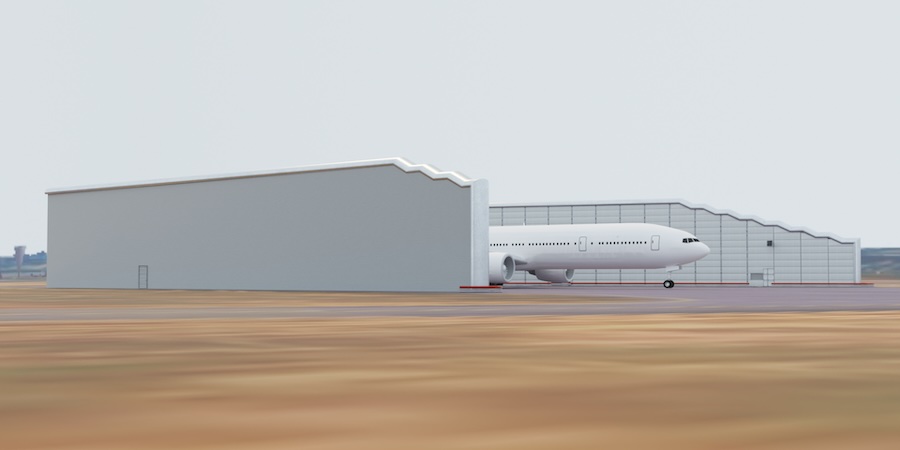
Brussels Airport has begun construction of a new ground run-up enclosure (GRE) designed to reduce noise generated during post-maintenance aircraft engine testing. Scheduled for completion by the end of March 2027, the new facility will allow aircraft engines to be tested at full power while significantly reducing noise for nearby communities.
The project represents an investment of more than €15 million and forms part of the airport’s broader strategy to improve sustainability and minimize the environmental impact of airport operations.
Quieter engine testing
The new U-shaped enclosure will feature 15-meter-high noise barriers, reducing engine testing noise by up to 10 decibels, depending on the aircraft type and distance from the facility. A 10-decibel reduction is generally perceived as halving the sound level.
Residents in the nearby communities of Humelgem and Steenokkerzeel are expected to benefit the most from the reduced noise levels.
Engine run-up tests are a mandatory safety procedure carried out after aircraft maintenance to verify engine performance before returning an aircraft to service.
Designed for widebody aircraft
The facility will occupy approximately 8,000 square meters, slightly larger than a football pitch, and will be capable of accommodating large widebody aircraft, including the Airbus A350 and Boeing 787.
Construction began with foundation work, followed by paving before the installation of the acoustic barriers.
Currently, aircraft engine tests are performed in open areas. Once completed, the enclosed facility will allow these procedures to take place with substantially lower noise emissions while maintaining operational safety.
Supporting sustainable airport operations
Brussels Airport conducts approximately 150 to 200 engine run-up tests each year. To minimize community impact, these tests are only performed during daytime hours, between 7:00 a.m. and 10:00 p.m.
Construction of the new enclosure will not affect airport operations, with the facility expected to enter service by March 2027.