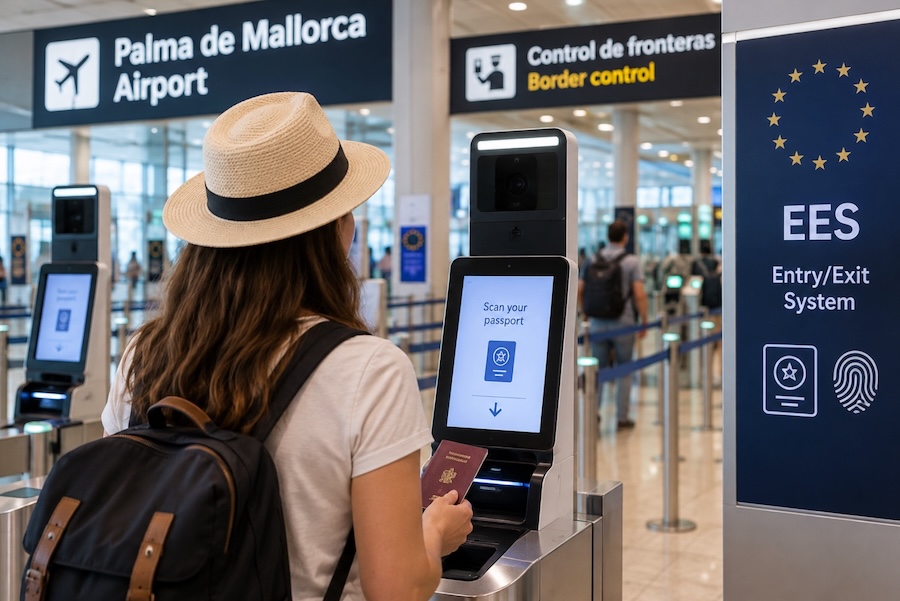

Non-EU passengers travelling through Palma de Mallorca Airport (PMI) face updated border control procedures from September 6, 2026, as temporary flexibility surrounding the European Entry/Exit System (EES) comes to an end.
The EES has been fully operational at European Union external borders, including Palma Airport, since April 2026. During the transition period, border authorities were permitted to temporarily suspend biometric registration when passenger queues reached critical levels.
From September 6, those optional suspensions will no longer apply at Palma, meaning eligible non-EU nationals entering or leaving the Schengen Area through the airport will be required to complete the applicable EES biometric validation process.
The change is particularly relevant for travelers from countries outside the EU, including UK passport holders.
Palma Airport Increases Border Control Staffing
Authorities have already taken measures to reduce the risk of long queues at passport control.
National Police staffing at Palma de Mallorca Airport was increased by approximately 50% in early August to handle increased passenger volumes during the busy summer travel season.
The additional staffing helped reduce average passport control waiting times to around 30 minutes, including during periods of high demand.
Aena Adds Passenger Support for EES Checks
Airport operator Aena is also introducing additional ground support to help passengers navigate the EES process and prevent bottlenecks at border control.
Aena has launched a tender for a dedicated passenger assistance service covering more than 10,500 hours over a three-month period.
Staffing will be adapted to flight schedules, with airlines providing advance information to help align support teams with arriving and departing flights carrying significant numbers of non-EU passengers.
The additional personnel will assist passengers in arrivals and departures, provide guidance on using automated gates and registration kiosks, manage queues and improve passenger flow through non-EU border control areas.
Support teams will also coordinate with National Police personnel and report operational issues that could affect passenger throughput.
Official border checks will continue to be carried out exclusively by the National Police.
What Non-EU Travelers Should Expect
Passengers subject to EES procedures should allow additional time when travelling through Palma Airport, particularly during busy periods.
Travelers should have their passports and other required documents ready before reaching border control and follow airport signage and staff instructions when selecting queues and using EES kiosks.
The changes form part of the wider implementation of the European Entry/Exit System, which uses automated registration and biometric information to record eligible non-EU travelers entering and leaving the Schengen Area.