
easyJet will introduce onboard internet for the first time through a partnership with Starlink, with installations beginning in the first half of 2027.
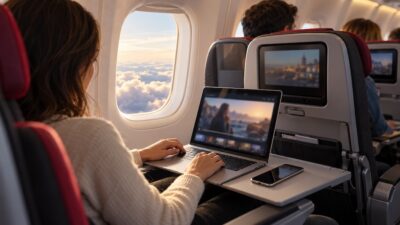
The airline plans to equip its Airbus A320, A320neo and A321neo aircraft, with the rollout expected to finish by early 2028. Passengers will be able to use their own devices to stream entertainment, play online games, browse and work during flights.
Announced on 26 October 2026, the agreement adds connectivity to an airline that carries around 100 million passengers annually.
Starlink rollout to cover A320 and A321 aircraft
The deployment will bring satellite-based Wi-Fi to the specified aircraft types progressively, meaning availability will depend on which aircraft operates a flight during the installation period.
easyJet has not announced pricing or detailed access arrangements, including whether the service will be free or available for a fee.
“In an increasingly digital world, staying connected matters more than ever to many of our customers, whether that’s holidaymakers looking to unwind with inflight entertainment, or our business customers keeping up to speed with what’s happening on the ground,” said easyJet Chief Executive Kenton Jarvis.
He said the investment would give both leisure and business passengers more choice when travelling.
Connectivity could support onboard ordering
Alongside entertainment and work, passengers will be able to access easyJet’s app and website and look up destination information, including weather, transport and visitor attractions.
The airline said the technology could also enable passengers to order food and drinks digitally from their seats. It did not announce a launch date for that functionality.
Gwynne Shotwell, President and Chief Operating Officer of SpaceX, said the partnership would bring connectivity “from take-off to landing,” allowing passengers to work, stream and stay in touch.
The planned introduction marks a change to easyJet’s onboard offering, with internet access becoming available as aircraft are equipped through 2027 and into early 2028.