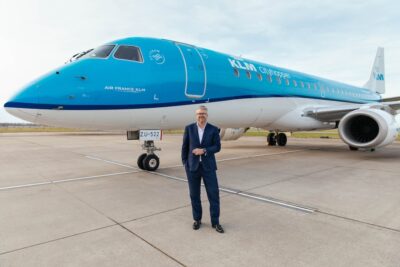

KLM Cityhopper is celebrating its 60th anniversary, marking six decades of growth from a small domestic airline operating two leased Fokker aircraft to one of the key components of KLM’s European network.
Today, the regional carrier operates a fleet of 58 aircraft, serves more than 80 destinations and runs over 350 flights per day. Around 11 million passengers travel with KLM Cityhopper each year.
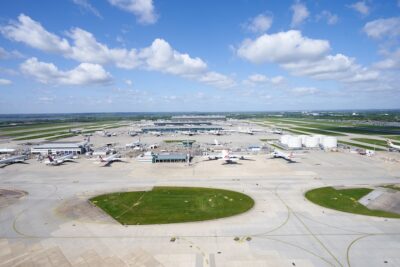
Its operations are closely integrated with KLM’s hub at Amsterdam Airport Schiphol, feeding passengers from cities across Europe into the airline’s long-haul network while also connecting international arrivals with destinations throughout the continent.
Recent additions to the KLM Cityhopper network include Biarritz, Exeter, Dubrovnik, Ljubljana, Cork, Jersey, Santiago de Compostela and Oviedo.
“Sixty years ago, KLM Cityhopper began as a small regional airline. Today, we are an essential part of KLM’s network and play a key role in connecting Europe with the world,” said Maarten Koopmans, Managing Director of KLM Cityhopper.
From NLM to KLM Cityhopper
The airline’s history dates back to 1966, when Nederlandse Luchtvaart Maatschappij, or NLM, was established to provide faster air connections between regions of the Netherlands.
Operations initially began with two leased Fokker aircraft and a limited domestic network. Over the following decades, the airline gradually expanded beyond the Netherlands and added destinations across Europe.
The Cityhopper name was introduced in 1976. Further consolidation followed with a merger with NetherLines in 1991 and the later integration of KLM UK, eventually creating the KLM Cityhopper operation known today.
The airline continued to operate aircraft produced by Dutch manufacturer Fokker for several decades before beginning its transition to Embraer aircraft in 2008.
Embraer fleet at the centre of operations
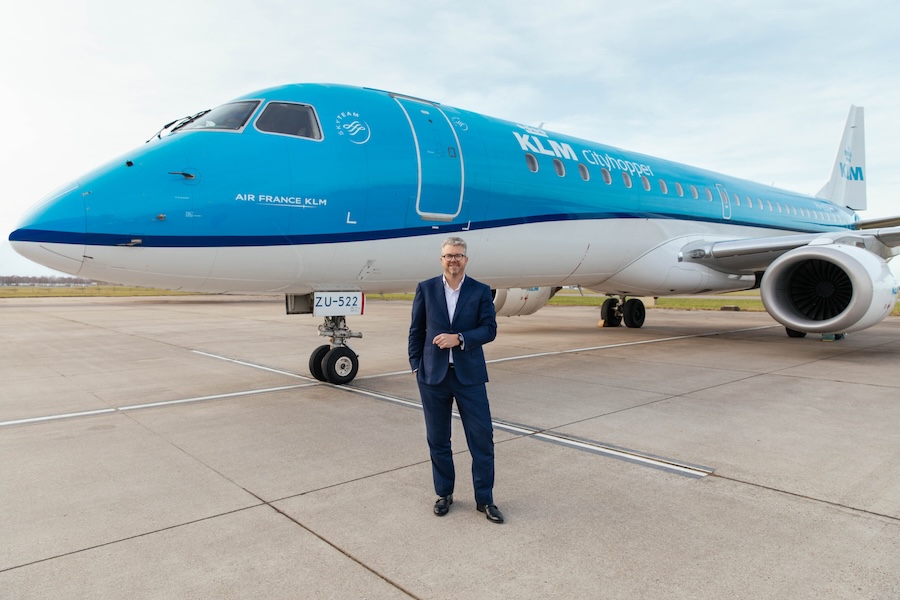
Embraer aircraft now form the backbone of KLM Cityhopper’s fleet, including the latest-generation E195-E2.
The E195-E2 offers lower fuel consumption and noise levels than previous-generation regional aircraft, supporting KLM Cityhopper’s efforts to improve the efficiency of its short-haul operations.
Fleet development will remain one of the airline’s priorities as it looks to further optimise its network and add new European destinations.
KLM Cityhopper used to test new aviation technology
Beyond its role as KLM’s regional operator, Cityhopper has increasingly been used as a testing ground for technologies and operational changes that could later be adopted more widely across the KLM group.
Among these initiatives is virtual reality training for pilots, which supplements conventional simulator and in-flight training.
KLM Cityhopper has also introduced OptiClimb, a system designed to reduce fuel consumption and CO₂ emissions during an aircraft’s climb to cruising altitude.
The application analyses factors including aircraft weight, weather, aircraft type and route before recommending an optimised climb speed to the flight crew.
The carrier is also participating in The Aviation Challenge for a fourth year, testing initiatives involving artificial intelligence, sustainable aviation fuel, aircraft weight reduction, reduced food waste and the electrification of ground operations.
Six decades after its first flights, KLM Cityhopper has evolved from a small domestic operation into a major feeder airline for one of Europe’s largest aviation hubs, linking KLM’s long-haul network at Schiphol with more than 80 destinations across Europe.