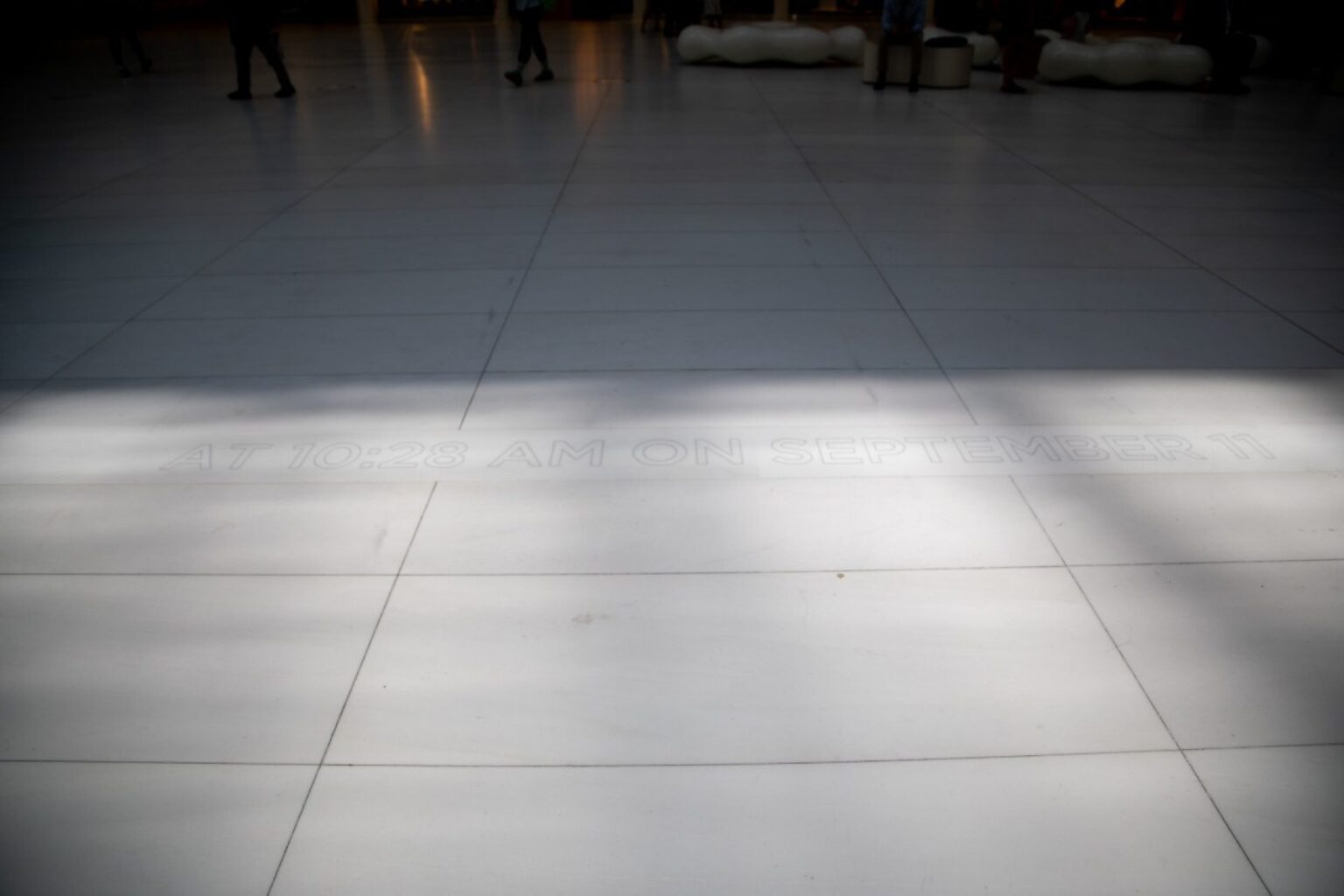

The Port Authority of New York and New Jersey has installed a new permanent memorial feature inside the Oculus Transportation Hub at the World Trade Center, physically marking the path of sunlight associated with the site’s “Wedge of Light” architectural concept.
The installation traces the position of sunlight across the Oculus on September 11 between 8:46 a.m. and 10:28 a.m., corresponding to the time when the North Tower was struck and the time when it collapsed.
The markings were installed ahead of the 25th anniversary of the September 11, 2001 attacks.
The story behind the Wedge of Light
The Wedge of Light originates from the World Trade Center master plan developed by architect Daniel Libeskind following the destruction of the original complex.
Libeskind’s concept used the movement of the sun as part of the architecture of remembrance, influencing the orientation and geometry of public spaces throughout the rebuilt World Trade Center campus.
On September 11 each year, sunlight follows a particular path through the Oculus during the period between the first attack on the World Trade Center and the collapse of the North Tower.
The architectural alignment allows light to fill the transportation hub during this period, creating what became known as the Wedge of Light.
The idea drew inspiration from commemorative sundials and the relationship between sunlight, time and remembrance.
Marble and glass installation added to Oculus floor
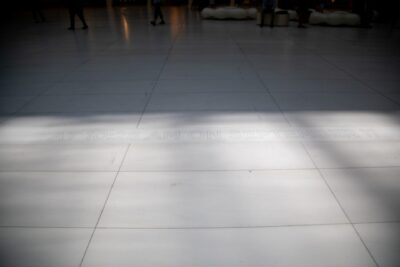
The new permanent installation consists of a glass and Lasa marble centerpiece, accompanied by inscriptions extending across the east and west sides of the Oculus.
Together, the markings trace the axis and angle of the sun between 8:46 a.m. and 10:28 a.m.
The marble includes precise astronomical coordinates associated with the position of the sun at the final moment:
“AZIMUTH 128.45 TO NORTH | ALTITUDE 41.33 TO THE SUN | AT 10:28AM ON SEPTEMBER 11, 2001.”
A circular centerpiece that visitors can walk across carries another inscription:
“HERE THE SUN STANDS AT 10:28 AM ON SEPTEMBER 11, COMPLETING A WEDGE OF LIGHT.”
The marble medallion is covered with anti-slip glass, allowing it to function as a permanent part of the transportation hub’s floor.
Connecting the Oculus with the September 11 timeline
The two times represented by the Wedge of Light correspond with two of the four major moments associated specifically with the World Trade Center attacks.
American Airlines Flight 11 struck the North Tower at 8:46 a.m., followed by United Airlines Flight 175 striking the South Tower at 9:03 a.m.
The South Tower collapsed at 9:59 a.m., while the North Tower collapsed at 10:28 a.m.
These events are among the seven official moments of silence observed annually by the 9/11 Memorial & Museum.
“Permanently weaving that wedge of light into the literal foundation of the Oculus is a fitting tribute to the memory of those first moments of the attacks and to the master design vision that our redeveloped campus is built around,” said Port Authority Chairman Kevin O’Toole.
Port Authority Executive Director Kathryn Garcia said the installation was also intended to help future generations understand the connection between the architecture of the World Trade Center campus and the events it commemorates.
Oculus serves millions of New York visitors
The Oculus is both an architectural landmark and one of Lower Manhattan’s major transportation hubs, serving the World Trade Center PATH station and connecting with New York City’s subway network.
It sits within the 16-acre World Trade Center campus managed by the Port Authority of New York and New Jersey, an area visited by millions of people each year.
The new floor installation makes an element of the site’s master plan that is normally most apparent through sunlight on September 11 visible throughout the year.
For visitors passing through the Oculus, the markings now provide a permanent physical reference to the Wedge of Light and the precise moments in time around which Daniel Libeskind originally conceived the feature.