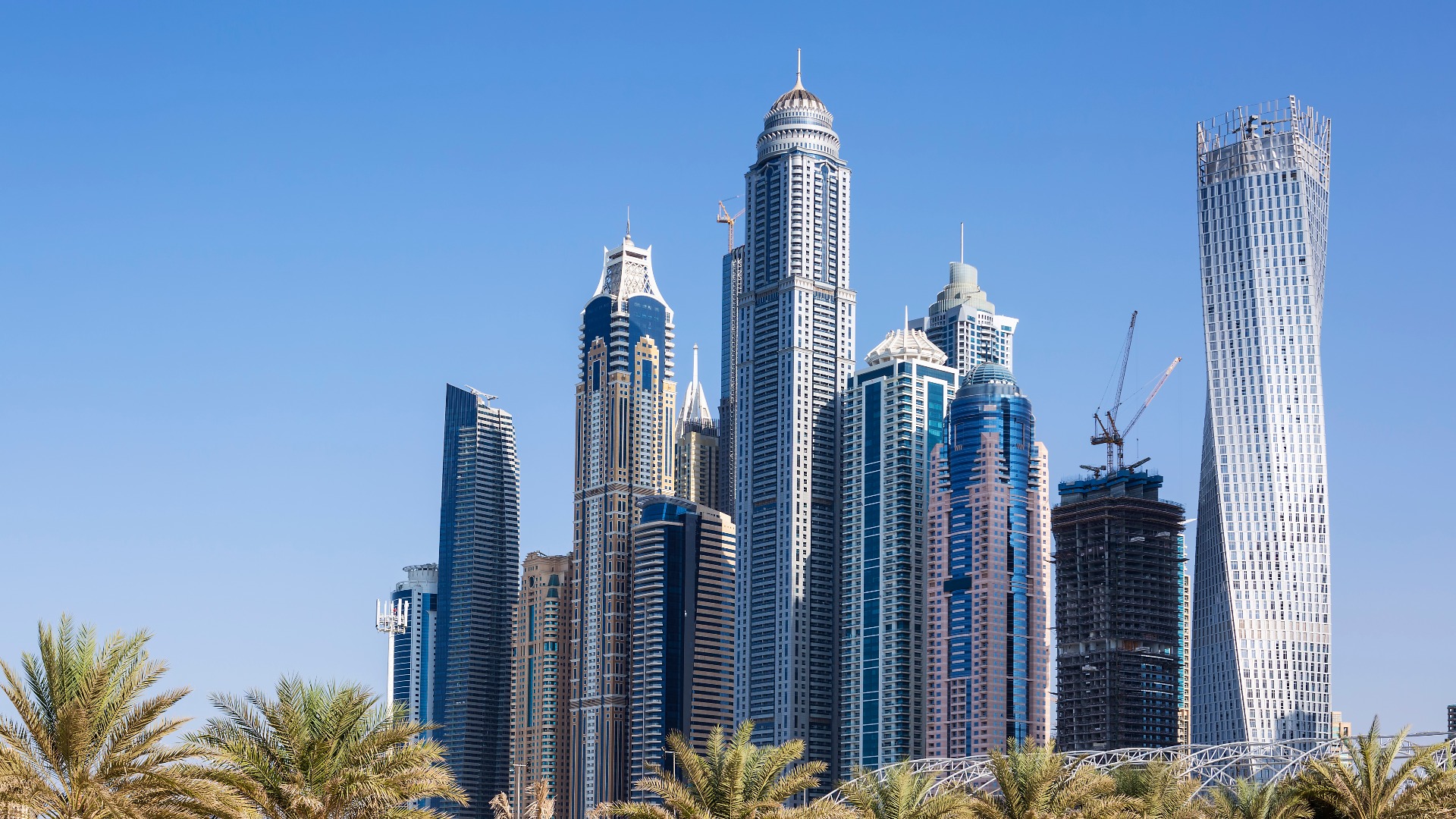
High-End Hotels In The Middle East - A Tight Race
The UAE and Saudi Arabia are vying for the same position as the most popular tourist destination in the world, while unveiling new hotel development projects.

As investors become more optimistic about the Middle East, the race to build the most extravagant hotels has begun.
For instance, in February, multi-project developer Red Sea Global unveiled intentions to construct the health and wellness-focused Clinique La Prairie Health Resort in collaboration with the Swiss longevity centre Clinique La Prairie. The construction is being built as a part of Red Sea Global's AMAALA megaproject, a high-end resort area being planned on the shores of the sea in northwest Saudi Arabia. Until 2027, AMAALA will cover more than 4,000 square kilometres and include 25 hotels in addition to the roughly 900 luxury villas, flats, and estate houses now under construction. Almost 1,300 hotel rooms spread over eight resorts will be ready for visitors by the middle of 2024 when the first phase of construction is scheduled for completion.
Simone Gibertoni, CEO of Clinique La Prairie, commented about the company’s ambitious project:
“At Amaala, we are creating the most important health and longevity-focused resort ever developed. We’re delighted to be building our very first full-scale destination in such an extraordinary setting and to help bring Red Sea Global’s vision of regenerative, ultra-luxury tourism to life.”
Yet the frenetic development push isn't risk-free, even as cranes cover the skylines above the dry landscapes. New hotels built as a result of the fast development may have trouble filling rooms if the corresponding increase in tourists does not materialise. Once the 2022 World Cup concluded and spectators departed Doha, the city was left with an overabundance of unoccupied hotel rooms, casting doubt on whether the city's development race will provide the expected return.
Many major international hotel groups are also in the running, including Hilton, Marriott International, Accor, and InterContinental Hotels Group (IHG). Among the major hotel chains in the area, Hilton has the most ongoing construction projects. Nonetheless, last year saw a remarkable number of new hotels launch in the Middle East, with 81 new openings accounting for 17,736 rooms. Compared to 2021, there was a 56% rise in the number of announced new projects, indicating that the increasing trend holds.
When compared to other Middle Eastern nations, Saudi Arabia has the most extensive plans for new hotel building. Lodging Econometrics' report on the Middle Eastern building pipeline shows that the three cities with the most active development projects are Provincial, Riyadh and Jeddah. The next cities in line are Doha and Cairo. Around half of all Middle Eastern development projects and over half of all rooms now under development are located in these five metropolises.
Collective Retreats, located in the United States, is building a resort in Trojena, in collaboration with NEOM, a $500 billion megaproject. Collective Trojena is a construction project that will be situated in the northwest of the Kingdom, against a background of mountains. The next edition of the Asian Winter Games will be held in NEOM in 2029.
The Saudi government wants to diversify the country's economy away from its reliance on oil by fostering tourism. Over this decade, the nation will spend $1 trillion in high-end hospitality services like AMAALA, with the aim of attracting 100 million tourists annually by 2030. Its goal is to attract even more visitors than Dubai, which plans to have 40 million stay in its hotels by 2031.
There are 104 hotel projects planned for the UAE by the end of the year 2022, making it the second-busiest country in the world for hotel building behind Saudi Arabia. The number of foreign overnight stays to Dubai, the country's most popular tourist destination, reached 14.36 million in 2022, coming close to the 16.73 million seen in 2019.
Aleph Hospitality, located in Dubai, has entered the branded hotel sector by signing an exclusive partnership with Fauchon Hospitality, a pioneer in French modern cuisine, to build and manage the chain's premium hotels across the Middle East and Africa. The portfolio will centre on chic urban areas and high-end holiday spots, including establishments like gourmet eateries, artisanal tours, and Fauchon spas. By 2026, Aleph Hospitality plans to have 50 properties in the area.
Dubai's ruler, Sheikh Mohammed bin Rashid, issued an announcement stating that the United Arab Emirates is committed to strengthening the country's standing as the world's most popular place for foreign visitors and that the nation is eager to develop new growth prospects in the tourism industry as a part of its attempts to provide a solid basis for investors.
According to Lodging Econometrics, there will be 123 hotel openings in 2023, and this number will drop to 116 the following year.
source: skift.com

Latest Articles