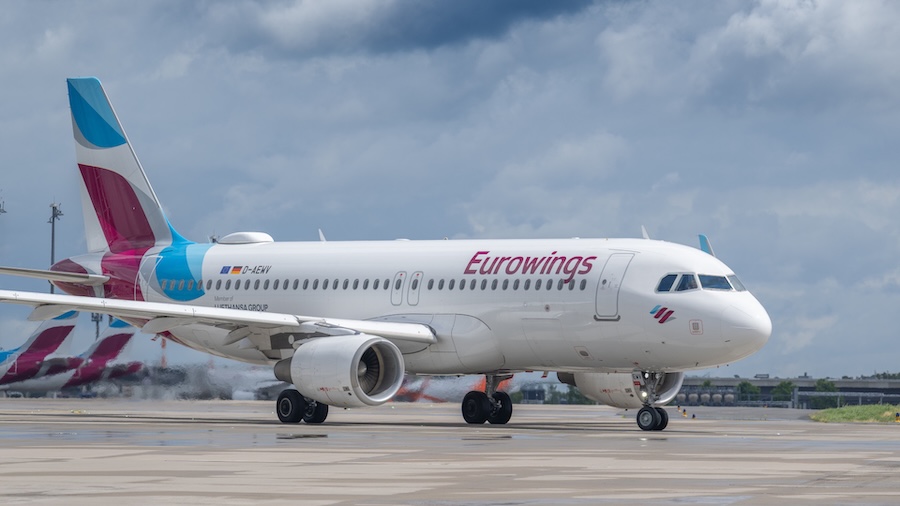

Eurowings carried more than 10 million passengers during the first half of 2026, completing 75,000 flights to more than 150 destinations while maintaining an operational regularity rate of nearly 99%, despite weather disruptions, strike action and the impact of the Middle East crisis.
Germany’s largest leisure airline said its operational performance remained stable throughout the first six months of the year, even as it was forced to make last-minute schedule adjustments due to geopolitical developments in the Middle East.
Customer satisfaction also remained strong, with the airline recording a Net Promoter Score (NPS) of 47, a level considered high within the aviation industry. According to passenger surveys, more than 71% of customers said they would choose to fly with Eurowings again.
Mediterranean Demand Remains Strong
Demand strengthened noticeably during the second quarter, particularly for destinations in the western Mediterranean, as travelers shifted holiday plans toward perceived safer destinations amid ongoing geopolitical tensions.
Traditional leisure destinations, led by Mallorca, benefited most from the change in booking patterns.
The airline also reported an average load factor of 85.3% during the first half of the year.
Berlin Expansion Continues
Eurowings continued expanding its presence at Berlin Brandenburg Airport (BER), where it now serves around 50 destinations during the summer schedule.
The expansion includes additional direct flights to several European capitals, including London, Lisbon, Sarajevo, and Rome, with the Rome route scheduled to launch in November.
Rising Costs Weigh on Earnings
Despite solid passenger demand and operational performance, higher operating costs continued to pressure profitability.
The Lufthansa Group’s point-to-point segment, which includes Eurowings and its stake in SunExpress, reported an adjusted EBIT loss of €252 million during the first half of 2026.
The airline attributed the weaker financial performance primarily to higher fuel costs linked to the conflict in the Middle East, as well as increasing aviation taxes and airport charges in Germany.
“More than ten million passengers chose Germany’s largest holiday airline in the first six months of 2026,” the airline said, highlighting continued customer confidence despite an increasingly challenging operating environment.
Eurowings noted that holiday airlines traditionally generate the majority of their annual earnings between June and October, when demand peaks during the European summer travel season.