
Turkish Airlines has finalised an agreement for up to 150 Boeing 737 MAX aircraft, placing its largest-ever order for Boeing single-aisle jets.
The deal includes 100 firm orders for the 737-8 and options for 50 additional 737 MAX aircraft. It also gives the airline substitution rights for the larger 737-10, allowing it to adjust aircraft capacity as demand develops.
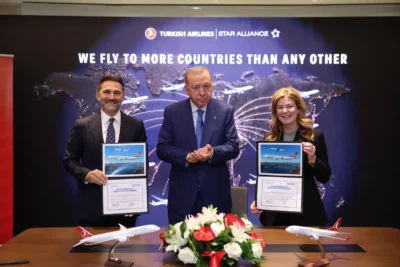
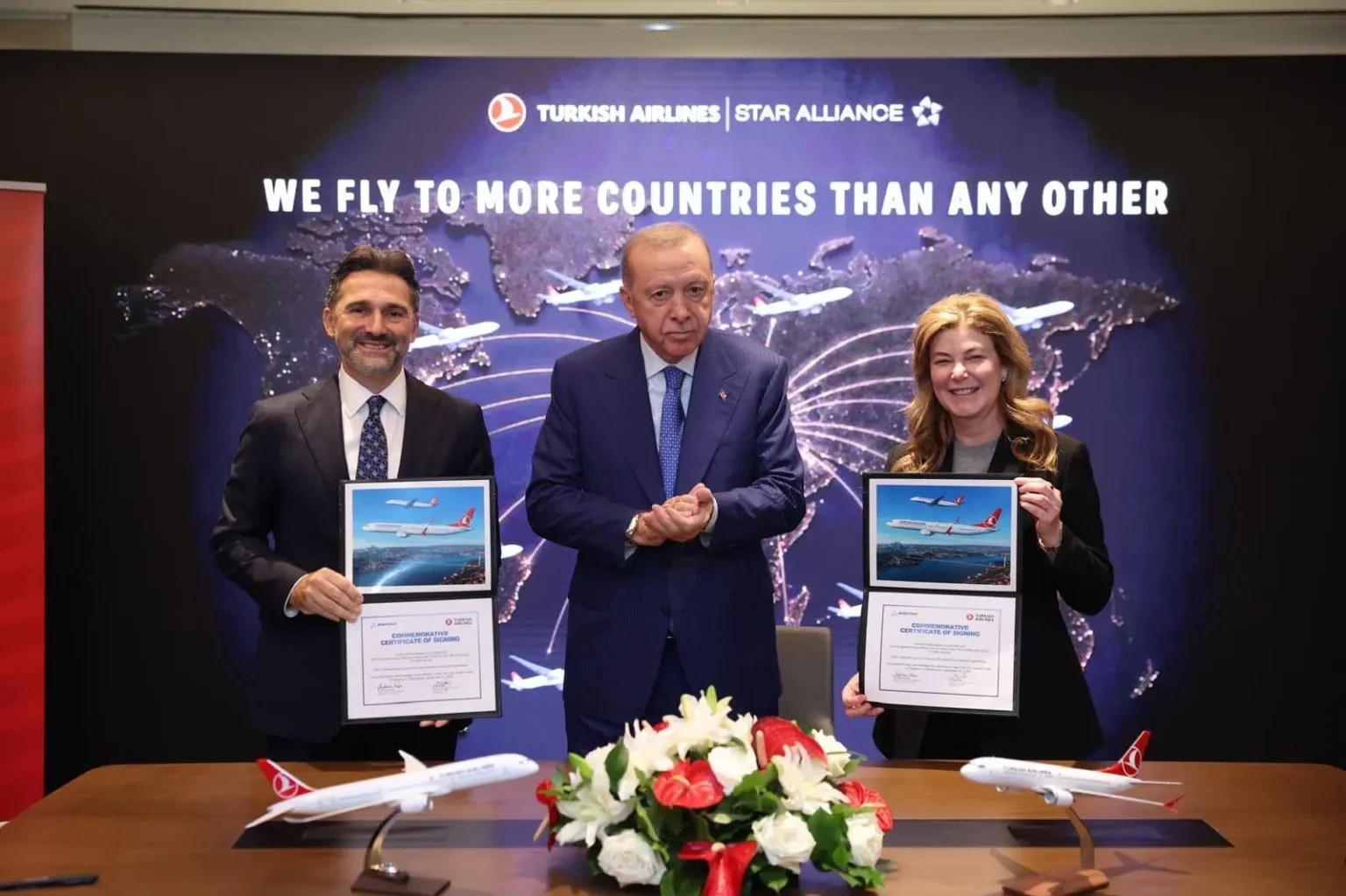
Negotiations began in 2025, and the agreement was finalised in the presence of Turkish President Recep Tayyip Erdoğan.
New Aircraft to Support Istanbul-Based Network
The aircraft will support Turkish Airlines’ short- and medium-haul network, particularly high-demand domestic and international routes served through its Istanbul hub.
Chairman Prof Murat Şeker said the order would bring greater operational efficiency and flexibility while supporting the airline’s continued fleet expansion.
The substitution rights provide scope to use the larger 737-10 where additional seats are needed. The announcement did not specify a delivery timetable or how many aircraft might ultimately be switched to that variant.
Boeing Partnership Builds on Dreamliner Order
Turkish Airlines and its subsidiary AJet currently operate more than 200 Boeing aircraft. The combined fleet includes 737 MAX and 737 Next-Generation jets, alongside 787 Dreamliners, 777s and 777 Freighters.
The new agreement follows Turkish Airlines’ order for 75 Boeing 787 Dreamliners in 2025, extending the partnership across both single-aisle and widebody aircraft.
Stephanie Pope, President and CEO of Boeing Commercial Airplanes, said the latest order would support the carrier’s expanding Istanbul-based network and Boeing’s continued involvement in Türkiye’s aviation sector.
Industrial Agreement Extends Cooperation Beyond Aircraft
Separately, Turkish Airlines and Boeing signed a strategic Memorandum of Understanding on Industrial Participation this year.
The framework covers skills development, value creation and business opportunities. Its stated aims include technology and know-how transfer, workforce training, sustainability initiatives and further industrial cooperation.
Alongside the fleet order, the agreement broadens the companies’ relationship to include the development of aviation capabilities and supplier opportunities in Türkiye.