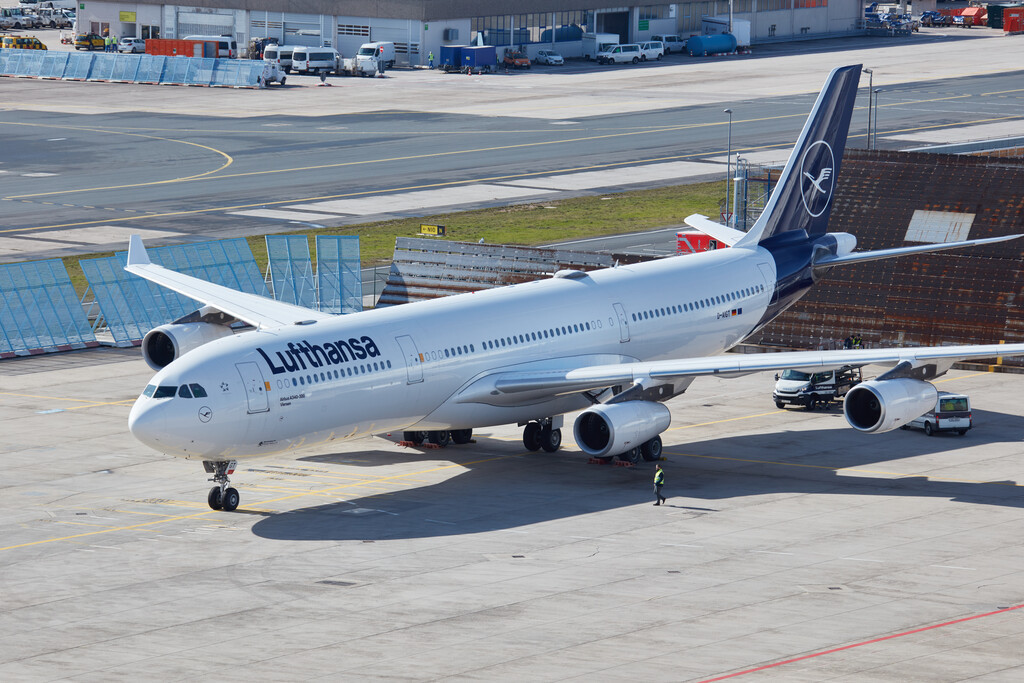

A Lufthansa Airbus A340-300 named after the city of Viersen is marking 15 years of climate research on July 8, 2026, having first taken to the skies in service of science on that date in 2011, on a flight from Frankfurt to Lagos.
The aircraft, registered D-AIGT, carries a compact measurement system installed beneath the cockpit that continuously monitors outside air via two fuselage probes during regular passenger flights, collecting atmospheric data at cruising altitudes of nine to thirteen kilometres. After each flight, the data is automatically transmitted to a central database at CNRS in Toulouse, where it is made freely available to the global research community.
The program, known as IAGOS (In-service Aircraft for a Global Observing System), is coordinated by Forschungszentrum Jülich in Germany and counts around 400 organizations worldwide among its users, including meteorological services and climate modeling institutions. The data helps identify long-term atmospheric changes, refine climate models, and improve weather forecasts, and forms part of the World Meteorological Organization’s global aircraft observation system.

Lufthansa Group’s commitment to atmospheric research actually stretches back even further — to 1994, when two A340-300s were equipped with the predecessor MOZAIC system. Across both programs, the group has now completed more than 37,500 measurement flights over three decades, building one of the world’s most extensive datasets on atmospheric ozone and water vapor.
Since 2015, two additional long-haul aircraft operated by Discover Airlines have joined the effort, bringing the Lufthansa Group’s IAGOS fleet to three aircraft. Up to all three now collect atmospheric data daily on routes across the globe.
“The use of passenger aircraft allows the collection of measurement data at a volume and resolution that would not be possible with dedicated research aircraft or satellites,” the group said, noting that the high-altitude cruising region covered is particularly significant for understanding the Earth’s radiation budget and climate.