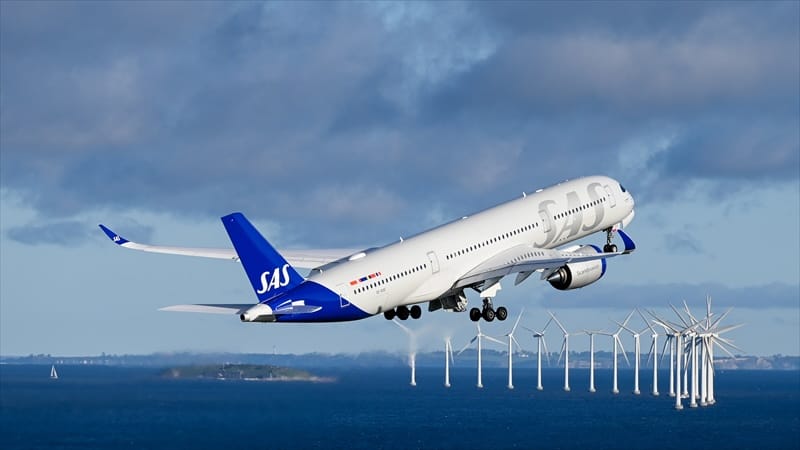

Scandinavia’s largest airline is sounding the alarm over what it describes as a looming structural crisis in sustainable aviation fuel, warning that Europe is sleepwalking into a supply shortage that could drive up ticket prices, force airlines to cut routes, and create a new form of energy dependency — all within a regulatory framework that mandates demand without securing supply.
A new report published by SAS, titled “The Need for e-SAF in Scandinavia,” lays out the scale of the problem. As the EU’s ReFuelEU Aviation regulation begins to bite from 2030, demand for electro-sustainable aviation fuel will rise sharply — yet not a single European production facility has yet reached Final Investment Decision. In other words, the infrastructure needed to meet legally mandated targets simply does not exist.
The numbers are stark. Scandinavian aviation alone will need 36,000 tonnes of e-SAF by 2030, climbing to over 160,000 tonnes by 2035 and 330,000 tonnes by 2040. Meeting those figures would require one dedicated production plant operational by 2032, scaling up to five plants by 2040. Currently, none are in place anywhere in Europe.
In a market where supply falls short of mandated demand, prices for e-SAF are expected to rise toward the cost of regulatory non-compliance — a level several times higher than conventional jet fuel today. The financial pressure on airlines could be severe, with knock-on effects for passengers and the broader competitiveness of European air connectivity.
SAS frames the situation as a narrowing window for decisive action, with two paths available: either Europe scales back its ReFuelEU ambitions and delays aviation’s net-zero transition, or it accelerates e-SAF production through targeted policy support, investment incentives, and infrastructure development.
Mads Brandstrup Nielsen, SAS Senior Vice President for Communication, Public Affairs and Sustainability, warned that failing to build domestic production capacity would amount to trading one fuel vulnerability for another — this time embedded within a regulated system that leaves airlines and passengers exposed.