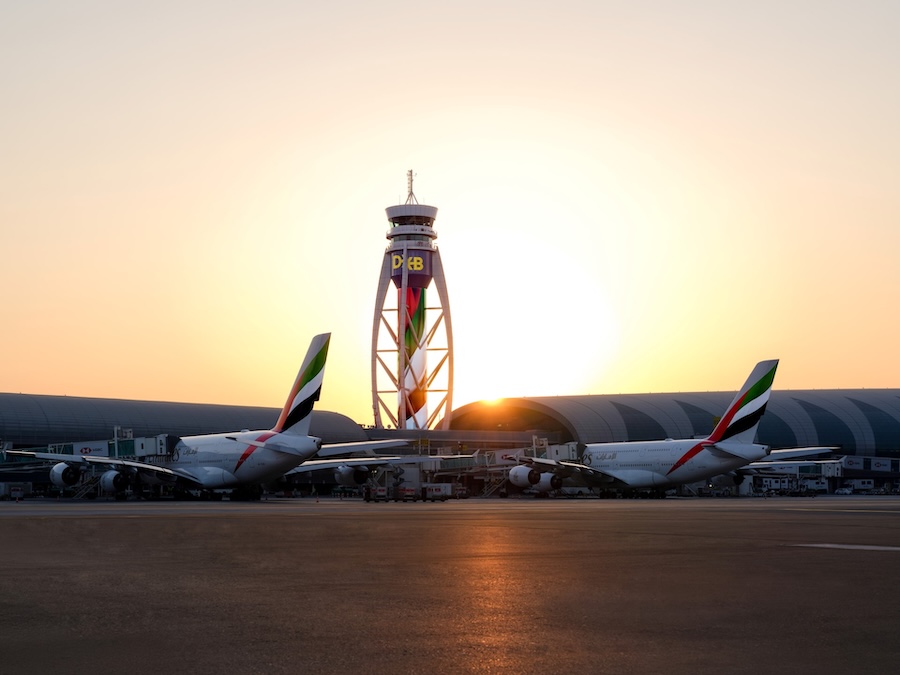

Dubai International (DXB) handled 50.4 million passengers in the first nine months of 2026. That is 28.1% fewer than in the same period last year, after disruptions earlier in the year. The third quarter was slightly less weak, with 18.8 million passengers, down 22.1% year on year. August was the busiest month, with 6.6 million passengers.
Dubai Airports still expects to welcome more than 70 million passengers in 2026, as airlines continue to return to the hub.
“As more airlines return to Dubai and our network strengthens, we are focused on continuing to accommodate future growth while making journeys simpler and more seamless,” said Paul Griffiths, CEO of Dubai Airports.
Airlines coming back
DXB is currently served by 57 airlines flying to 235 airports in 101 countries. British Airways resumed flights earlier this month, joining other returning airlines such as Royal Air Maroc, SunExpress and Cebu Pacific. More carriers are expected to come back in the coming weeks.
Passengers are split almost evenly between those starting or ending their journey in Dubai and those connecting to other flights. In September, connecting passengers made up 51% of traffic. The airport expects the share of passengers visiting Dubai itself to grow over the winter tourist and events season.
India and London on top
India was DXB’s biggest market in the third quarter, with 2.6 million passengers, followed by Saudi Arabia (1.4 million) and the UK (1.3 million). London was the busiest city route, with 784,000 passengers, ahead of Mumbai, New Delhi, Riyadh and Jeddah.
Several leisure destinations grew despite the overall decline. Milan was up 20%, Phuket 17%, Cape Town 14%, Barcelona 13% and Bali (Denpasar) 11%.
Short queues
In the third quarter, 99.9% of passengers waited less than 10 minutes at departure passport control and less than 15 minutes on arrival. At security, 99.7% of passengers waited under five minutes. Of the 48 million bags handled so far this year, 91% were delivered within 45 minutes of arrival.
The airport is putting more money into AI, predictive analytics, self-service and biometrics. Its goal is to move more passengers through existing terminals without having to build new ones.
Flight numbers fell 27.6% to 243,000 in the first nine months, and cargo volumes fell 23.2% to 1.2 million tonnes.