
Brussels Airport has presented the results of more than 30 sustainability projects tested over five years under its European-backed Stargate programme, with electric ground equipment and digital cargo handling now part of daily operations.
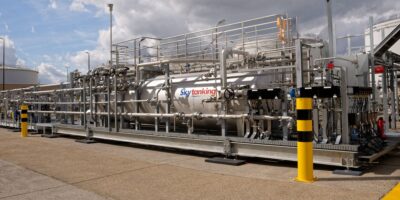
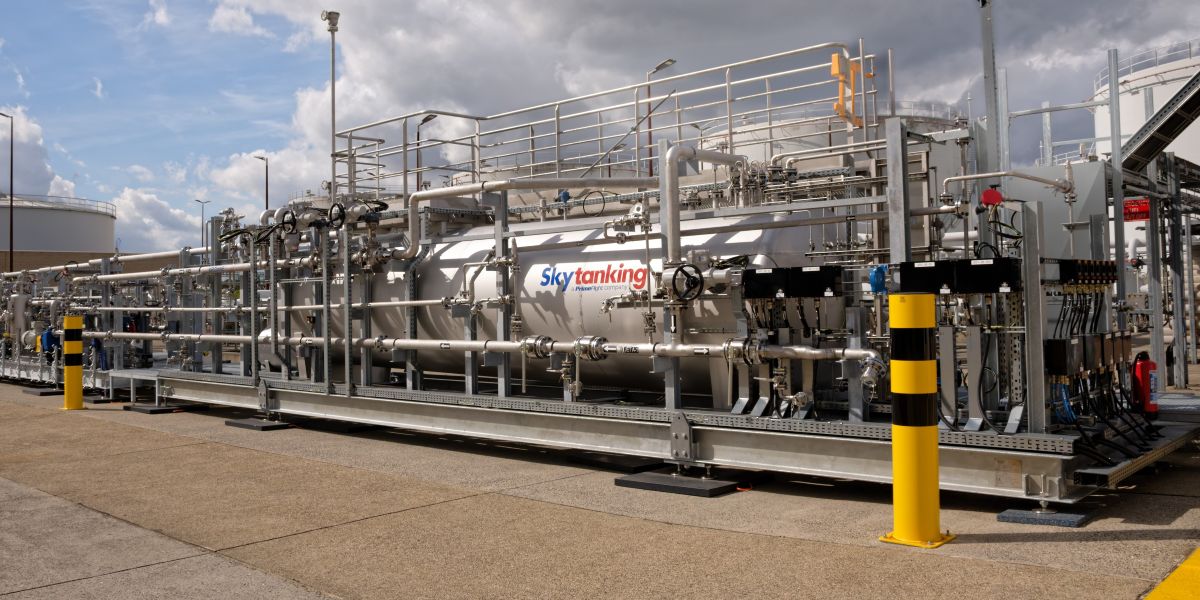
The airport worked with 22 partners on initiatives covering emissions, local air quality, noise and transport links. Its final pilot, conducted with Skytanking, is testing a mobile installation that blends sustainable aviation fuel components with conventional kerosene on site.
According to Brussels Airport, it is the first European airport to trial such a system. The test will continue until the end of 2026.
Electric Ground Equipment Moves Into Daily Use
Stargate helped accelerate the introduction of electric ground handling equipment at Brussels Airport, following trials with DHL that began when the technology was less established in 2021.
Skytanking also developed two customised electric fuel dispensers through the programme. Both are now used in daily operations.
Partner airports tested similar changes. Athens introduced electric apron service vehicles, while Brussels and Toulouse-Blagnac trialled hydrogen-powered ground equipment.
The hydrogen trials identified potential uses where battery electrification is impractical, although infrastructure and fuel supply remain obstacles.
Aircraft Towing Trial Cuts Noise and Ultrafine Particles
Brussels Airport and TUI tested Taxibot, a semi-automatic towing system that allows aircraft to taxi without running their engines.
Measurements by the Flemish Institute for Technological Research, VITO, found that the system could reduce noise by 10 to 15 decibels and ultrafine particles by up to 80%.
The airport said the operational benefits depend on taxi times. Findings from the trial are being shared with other airports.
Digital System Handles 95% of Cargo-Zone Goods
One of the programme’s permanent changes is the Digital Green Lane, a paperless delivery and collection process supported by BRUcloud applications.
Brussels Airport says 95% of goods in its cargo zone are now processed through the system, reducing paperwork, lorry waiting times and associated carbon emissions.
Other digital projects included an app developed at Budapest Airport to improve vehicle navigation and safety on the apron.
Cycling and Public Transport Initiatives Take Shape
Stargate also examined how passengers and staff travel to airports. Brussels and Toulouse-Blagnac developed sustainable mobility plans, with initiatives including shared bicycles, public transport information and a high-speed rail feasibility study.
At Brussels, improvements included additional cycle paths and clearer signage. The bicycle counter on the route towards the terminal recorded a 20% increase in 2025. Across all counting points, cyclist numbers were up by an average of 7% in 2026 at the time of the announcement.
Mobile Blending Trial Explores Higher SAF Supply
The final pilot is examining how airlines seeking a higher proportion of sustainable aviation fuel could receive targeted supplies at Brussels Airport.
The mobile installation blends a low-carbon fuel component with conventional kerosene on demand. Alongside the practicalities of delivery, the trial will assess the effect on local air quality.
Brussels Airport CEO Arnaud Feist said Stargate had allowed partners to test technologies in everyday airport operations and identify which were ready for wider use and which needed further development.
The programme received funding through the European Union’s Horizon 2020 research and innovation programme.