Middle East Airspace Crisis Hits Spanish Airports
Escalating military tensions linked to the conflict involving the United States, Israel and Iran are causing major disruption to air travel across the Middle East, forcing airlines to close routes and cancel numerous international flights.

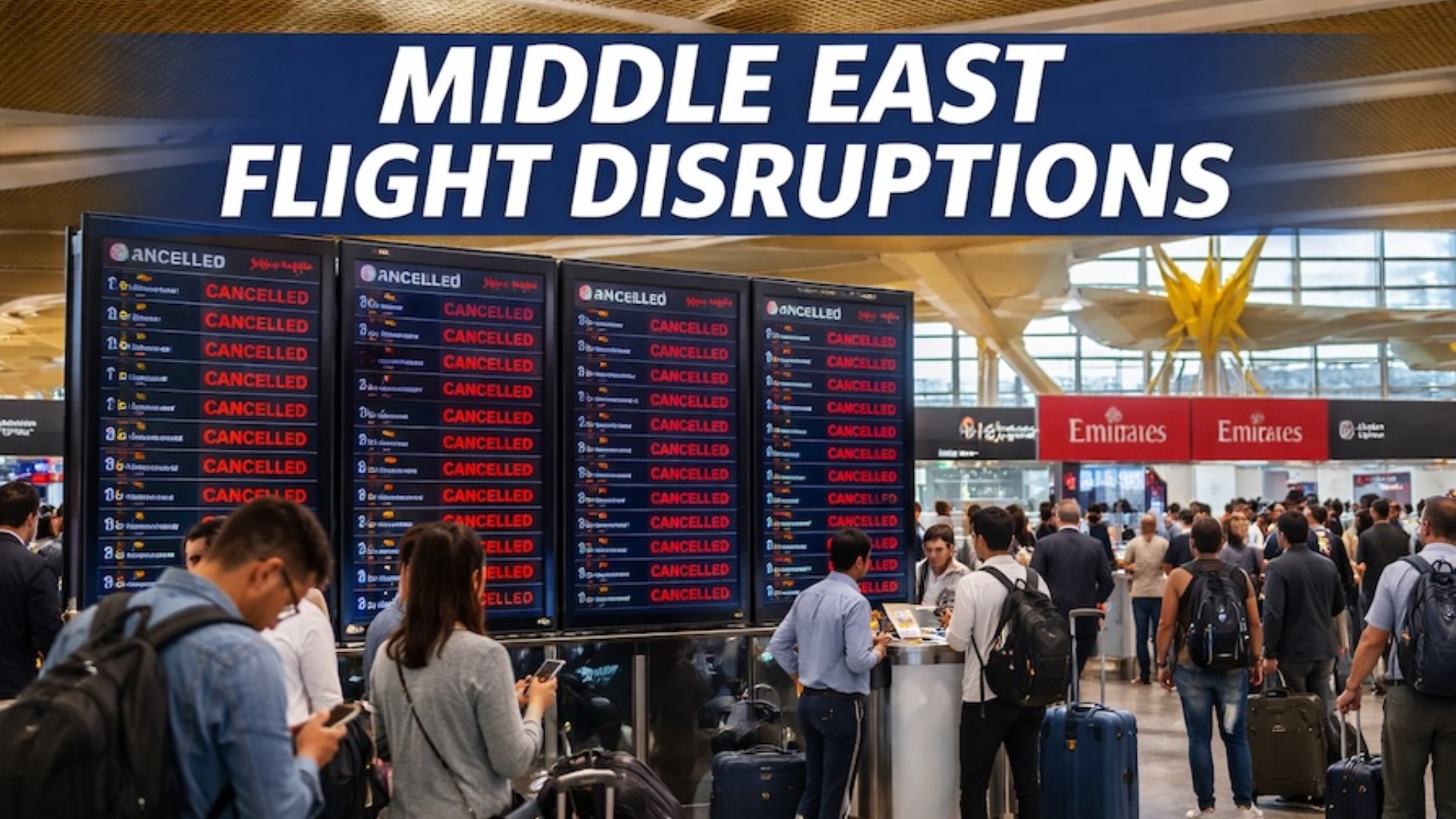
he situation is already having a direct impact on major Spanish airports, including Madrid–Barajas, Málaga–Costa del Sol and Barcelona–El Prat, where dozens of cancellations and delays have been reported. Flights connecting to or arriving from Gulf countries such as the United Arab Emirates, Qatar and Saudi Arabia have been particularly affected.
Airlines operating these routes, including Emirates, Qatar Airways and Etihad, have adjusted their schedules following the closure of airspace in several countries and safety advisories recommending that aircraft avoid flying over conflict zones.
As a result, passengers are facing cancelled flights, unexpected diversions and long queues at airline service counters in airports across Spain.
The disruption is not only affecting tourism and business travel. It is also creating difficulties for international participants traveling to major events such as Barcelona’s Mobile World Congress, where some exhibitors and attendees from the Middle East are struggling to reach the city on time.
What affected passengers should do
Travellers with flights to or from the Middle East departing from Madrid or Barcelona are advised to check their flight status before heading to the airport, as schedules may change at short notice.
Passengers should contact their airline or travel agency directly to explore options such as refunds or rebooking on alternative flights. Many airlines are currently allowing free changes or full refunds due to the extraordinary circumstances.
Travellers should also review their rights under European Regulation (EC) 261/2004, which outlines passenger assistance, reimbursement and compensation rules in cases of delays or cancellations. However, events such as armed conflict or airspace closures may be considered extraordinary circumstances, which can limit compensation obligations for airlines.

Latest Articles