French Police Uses Excessive Force During Anti-Government Demonstrations
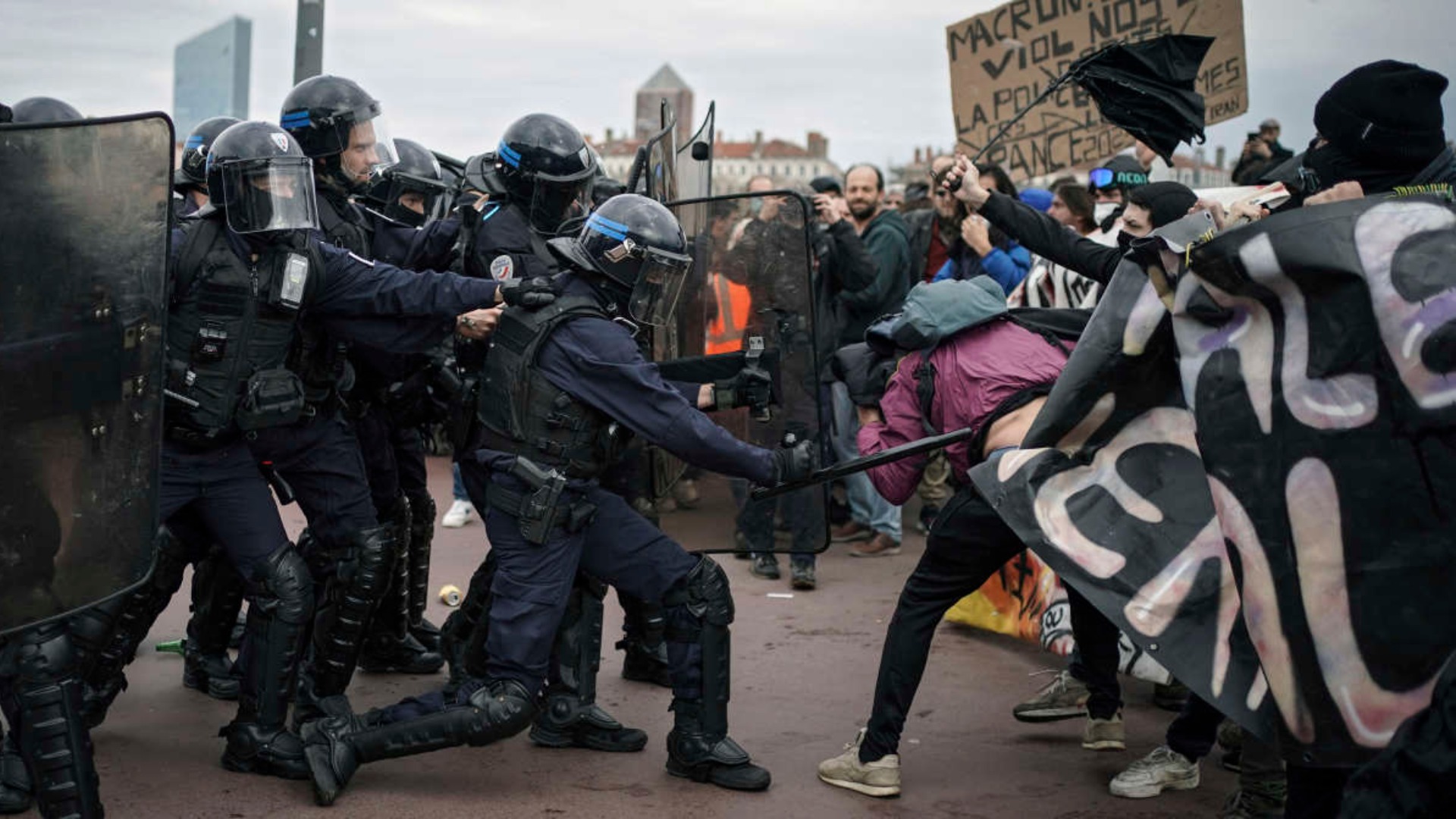
In March, police was deployed in reaction to a demonstration by environmental activists in western France and a surge of public fury sparked by President Emmanuel Macron's controversial proposal to increase the retirement age.

The use of preventative arrests to dissuade demonstrations and gather information on activists, as well as the employment of violent crowd control measures, have been denounced by attorneys and human rights advocates. Both the United Nations' human rights envoy and the European Union's human rights watchdog have questioned the adequacy of the French police's response, urging them to avoid using coercive power.
Just a small percentage of those arrested end up being charged; two persons are still in critical condition after being arrested at the environmental demonstration at the Sainte-Soline reservoir; 286 demonstrators have been hurt; one has lost an eye and another a thumb. Nonetheless, approximately 1,050 police officers have been hurt, a result of the guerilla tactics used by certain demonstrators.
According to some voices, the state has established a policy that breaches the threshold of what is allowed in order to deprive people of their freedoms and manage mass gatherings. These methods were initially extensively used by the gilets jaunes movement and currently cause serious worry.
Given the unpredictability of the situation during recent events, when a radical fringe of protestors assaulted cops with stones and bombs, the administration has justified the police's actions as required and legitimate.
Minister of the Interior Gérald Darmanin said categorically that people cannot talk about police misconduct. He went on to explain that the police were tasked with both enforcing public order and safeguarding the people' constitutionally protected right to demonstrate. To defend its citizens and their property, the state has the legal authority to use the use of force. He promised that law enforcement personnel who use excessive force or disobey instructions will face repercussions.
Macron, who is now on the defence on his pensions plan, has cast himself as a protector of law and order against what he refers to as "ultra-left" rebels. He has compared these rebels to rioters who would attack the United States Capitol two year ago, while defending the police's actions.
Nonetheless, some people thought it was disproportionate to send 3,200 police officers to deal with the 6,000 or so demonstrators in Saint-Soline. Officers on quad bikes rushed over fields as demonstrators threw Molotov cocktails, using tear gas and so-called LBD guns, which shoot rubber balls. At least a dozen persons were blinded or disfigured as a result of LBD usage during the gilets jaunes, drawing criticism of its use.
The French police have been accused of relying too much on force and intimidation and failing to adopt the more community-oriented strategies utilised in other nations. Police practises researcher Sebastian Roché claims that the United Kingdom and Germany provide training on how to de-escalate situations via communication with demonstrators. Since 1985, there have been five deaths in France due to demonstrations, whereas there has been just one death in the United Kingdom, Canada, Germany, and Italy combined.
Source: ft.com

Latest Articles