Frankfurt Airport Reduces Its Carbon Target
The aviation industry used the time-lull caused by the pandemic to set interim emission targets and surpassed the long-term goals of net zero targets.

They are often met with doubts about their feasibility, as they rely heavily on technology that is not yet scaleable.
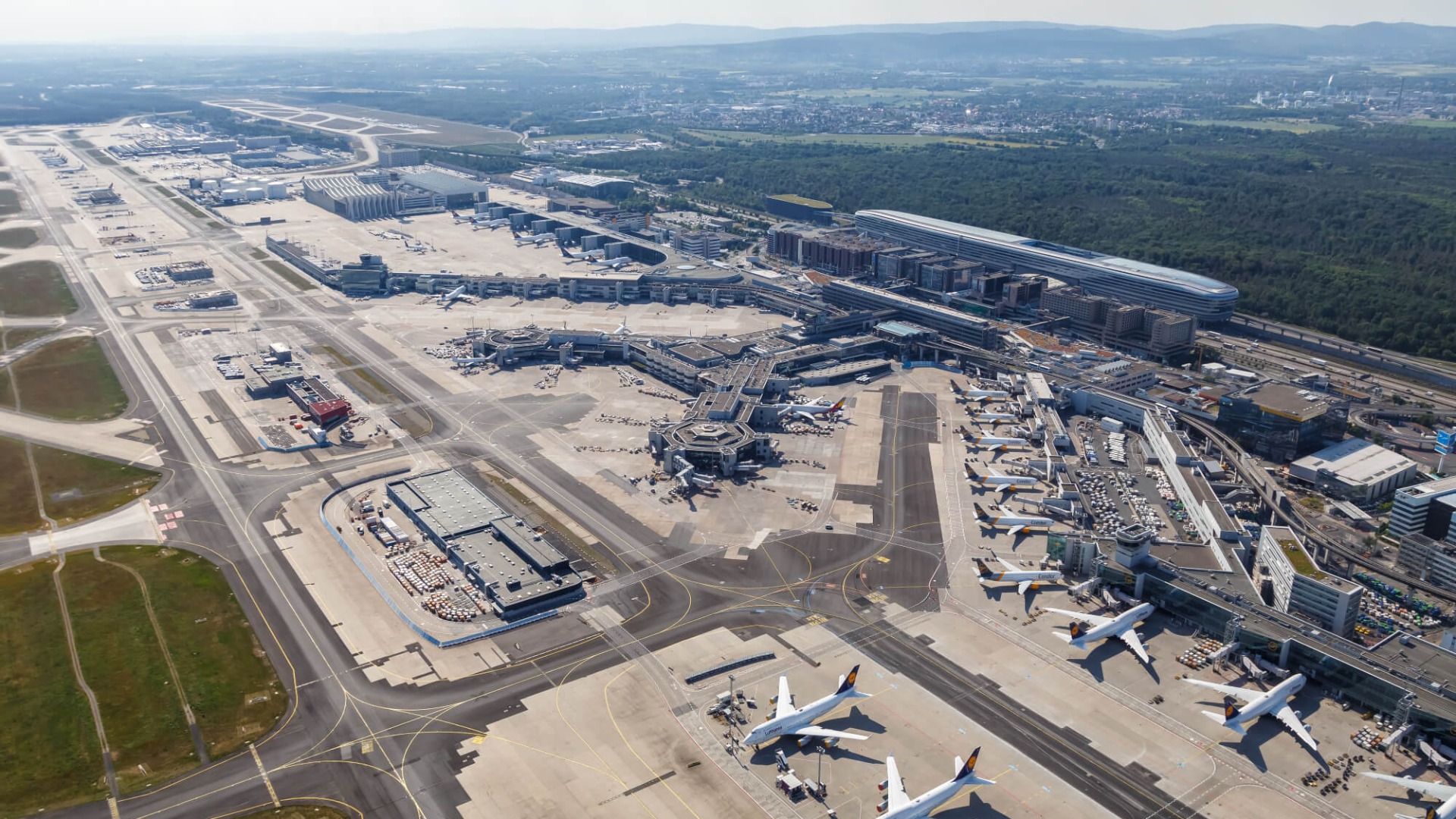
Airports are able to manage energy transitions a bit easier than airlines that rely on fossil-based Jet A fuel. The owners of Frankfurt Airport (German meghub Frankfurt Airport) believe they can accelerate emission reductions more than originally planned.
According to its earlier calculations, Frankfurt Airport's operator Fraport aimed to reduce carbon emissions at FRA by 75,000 tonnes by 2030. The target was re-evaluated on Wednesday and now aims to achieve a maximum of 50,000 tonnes CO2 by the end the decade, "in areas that fall under Fraport's direct control."
Dr. Stefan Schulte (CEO Fraport) commented on the new target.
"Aviation needs to make a significant contribution towards protecting our planet's climate. And we need to act faster than in years gone by. That's our responsibility. For this reason, we've once again revised our masterplan for climate action, intensifying our measures wherever possible."
Renewable energy
Energy transition is the most crucial component of FRA's efforts to reduce emissions. The airport's electricity mix will be largely renewable from 2026. An agreement with EnBW, Germany's energy company, will provide wind energy from the North Sea for around 85%.
Another "significant portion" will be provided by a park of solar cells panels. A park of solar cell panels will provide another "significant proportion."
The airport operator will also roll out intelligent, needs-driven technology to control air conditioning and lighting throughout the building infrastructure. Hong Kong Airport was the first to implement AI predictive algorithms to regulate air conditioning in late 2021. This system uses machine learning and real-time passenger flow data to maintain the temperature at Terminal 1 between 24 & 25.5 degrees Celsius. It will also reduce CO2 emissions by approximately 1,900 tonnes annually.
To reduce emissions in a specific area, there are different approaches
Fraport is not just responsible for Frankfurt Airport. The company also owns shares or airports in several other locations around the globe, including in the Americas and Asia. The operator's goal of becoming carbon-free by 2045 will apply to Lima (Peru), Burgas, Varna (Bulgaria), Ljubljana and Fortaleza (Brazil), Ljubljana and Fortaleza (Brazil), Ljubljana and Varna (Slovenia), Ljubljana and Fortaleza (Brazil), and the Group's 14 Greek airports. The company also claims that it will reduce carbon emissions by 95,000 tonnes at its global subsidiaries by 2030.
Schulte spoke out about the importance of localized approaches in different parts the world.
"We see climate change as a central challenge for our international business. We need ideas and approaches that are tailored to each location while taking their natural environment into account."
Source: simpleflying.com

Latest Articles