
For travel creators, choosing the right camera is rarely about specifications alone. Size, stabilization, battery life and how quickly footage can move from camera to phone or laptop often matter just as much as image quality.
Sponsored Content / Affiliate Disclosure: This article contains affiliate links. TravelWires may receive a commission when a purchase is made through qualifying links, at no additional cost to the buyer.
That is where the DJI Osmo Pocket 4 fits especially well for travelers filming across very different parts of the United States.
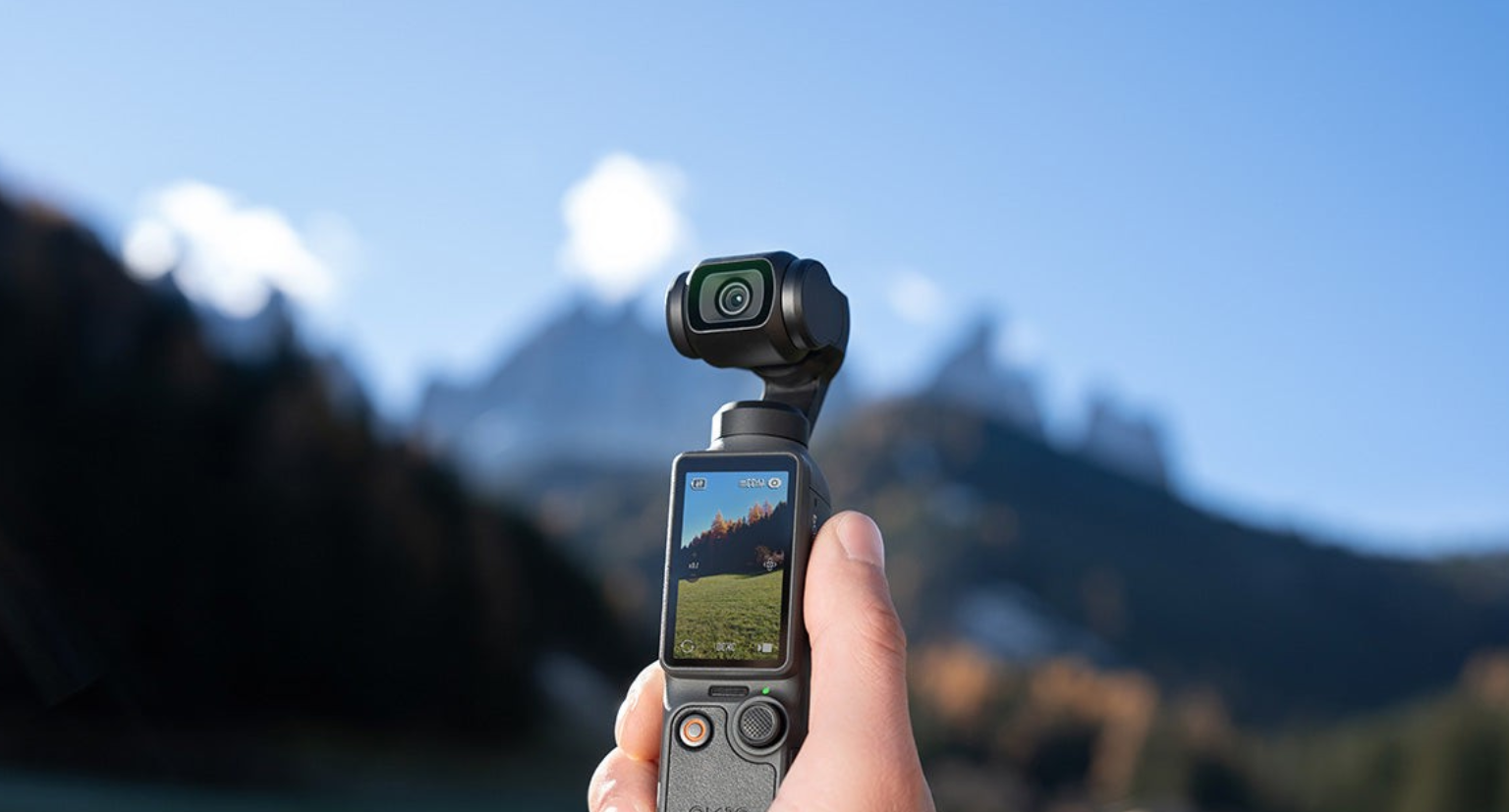
From coastal drives in California to theme-park days in Florida and fast-moving city footage in New York, the compact gimbal camera is designed around mobility. DJI equips the Osmo Pocket 4 with a 1-inch CMOS sensor, 4K recording at up to 240fps, three-axis mechanical stabilization, 107GB of built-in storage and a rotating OLED touchscreen.

For travelers who want a camera that can stay in a day bag instead of a dedicated camera case, that combination makes the Pocket 4 particularly interesting.
U.S. buyers can check current DJI Osmo Pocket 4 pricing and availability at OSMOCAM.
Why the Osmo Pocket 4 Works Well as a Travel Camera
The Pocket 4 sits between two common travel-camera choices.
A smartphone is easier to carry, but it does not offer the same mechanical gimbal stabilization or dedicated camera controls. A mirrorless camera provides more flexibility, but once lenses, batteries and stabilization equipment are added, the setup quickly becomes much larger.
The Osmo Pocket 4 keeps the camera and three-axis gimbal in a compact handheld body.
DJI’s 1-inch sensor is paired with a 20mm-equivalent f/2.0 lens, giving the camera a wide perspective suited to landscapes, streets, architecture and self-recorded travel footage. DJI also specifies up to 14 stops of dynamic range in supported modes and 10-bit D-Log recording for users who want more flexibility when grading footage later.
Those features become useful in places where lighting conditions can change quickly over the course of a day.
DJI Osmo Pocket 4 for California Road Trips
California is one of the most natural environments for a compact travel camera.
A single trip can involve bright coastal roads, city streets, mountains, beaches and low-light scenes within a relatively short distance.
For road-trip footage, three-axis stabilization is particularly useful when filming while walking between viewpoints, moving through towns or recording scenic stops. Instead of relying entirely on electronic stabilization, the Pocket 4 physically stabilizes the camera through its motorized gimbal.
That can help produce smoother footage along routes such as the California coast or during city stops in Los Angeles, San Diego or San Francisco.
The 1-inch sensor is also relevant when moving between bright daylight and softer evening conditions. DJI lists up to 14 stops of dynamic range, designed to retain more detail across highlights and shadows in supported shooting modes.
For creators filming coastal sunsets, mountain scenery or urban scenes late in the day, that flexibility can matter more than simply having a higher resolution number.
The camera’s wide 20mm-equivalent field of view also suits landscapes and walking footage without requiring an additional wide-angle lens.
California Creators Can Benefit From 4K Slow Motion
One of the more distinctive Pocket 4 features is its ability to record slow motion at up to 4K/240fps.
That gives travel creators more room to slow down action such as waves, cyclists, hiking scenes or movement around a destination while retaining a high-resolution image.
It is not a feature that needs to be used for every travel clip, but it can add variety to a road-trip edit without requiring a separate action camera.
For users producing short-form content, the same camera also supports vertical shooting, making it practical to capture both conventional horizontal travel videos and footage intended for Reels, Shorts or TikTok.

Travel Vlogging in Florida
Florida creates a different set of requirements.
Travel content often involves long days outdoors, crowded attractions, beaches, family trips and considerable time spent walking.
In that environment, a compact stabilized camera has an obvious advantage: it can be used quickly without assembling a larger camera rig.
The Pocket 4’s rotating 2-inch OLED display allows creators to switch shooting orientation, while ActiveTrack can follow selected subjects as they move through a scene. DJI says the updated tracking system can operate at up to 4x zoom in supported situations.
That can be useful for solo creators who want to appear in their own videos without constantly repositioning the camera manually.
A small tripod combined with subject tracking can turn the Pocket 4 into a simple self-filming setup for hotel walkthroughs, beach content, travel updates or destination commentary.
Battery Life Matters During Full Travel Days
Florida trips can easily mean spending most of the day away from a hotel room or charging point.
DJI rates the Osmo Pocket 4 for up to approximately 240 minutes of operating time under its specified 1080p recording conditions. The company also states that compatible fast charging can bring the battery to around 80% in approximately 18 minutes.
Real-world endurance will vary depending on resolution, frame rate, wireless functions, tracking and display use, but those figures make the Pocket 4 easier to manage during a long sightseeing day.
A USB-C power bank can provide additional flexibility for travelers who expect to spend many hours away from fixed power.
Built-In Storage Can Be Useful on the Road
The Pocket 4 includes 107GB of internal storage.
For travelers, that is more useful than it may initially appear.
Memory cards are easy to forget, fill or misplace during a trip. Built-in storage means the camera can continue recording even without a card installed, while removable storage can still be used when additional capacity is required.
DJI states that the internal storage can hold roughly 220 minutes of 4K/60fps footage at standard bitrate, though available recording time varies according to shooting settings.
The camera also supports wired transfers of up to 800MB/s under compatible conditions, which can help creators move large video files more quickly when editing during a trip.
Travelers considering the camera can see current Osmo Pocket 4 options for U.S. buyers at OSMOCAM.
Compact Travel Filming in New York
New York presents almost the opposite filming environment from a California road trip.
Instead of wide open landscapes, creators often deal with crowded streets, rapid changes in direction, public transportation, architecture and scenes where carrying a large camera can become inconvenient.
The Pocket 4’s compact form factor is especially relevant here.
A camera that can be removed from a small bag and begin recording quickly is much easier to use for spontaneous street footage than a larger camera body with a separate gimbal.
Mechanical stabilization also helps when filming while walking.
For city travel creators, smooth walking footage can make a significant difference when recording neighborhoods, attractions, hotel areas or street-level destination content.
ActiveTrack for Solo New York Creators
The Pocket 4’s updated ActiveTrack system is another useful feature for solo travel creators.
DJI says the camera can track a subject at up to 4x zoom and includes intelligent autofocus designed to keep selected subjects sharp.
That allows a traveler to place the camera on a compact tripod and walk through the frame while the gimbal adjusts automatically.
For New York content, that could be useful for filming short introductions, neighborhood guides, restaurant entrances, hotel surroundings or street commentary without another camera operator.
DJI also added dedicated physical controls beneath the touchscreen, including a zoom button and a customizable button, reducing the need to navigate through menus for commonly used functions.
One Camera for Horizontal and Vertical Travel Content
Travel creators increasingly publish the same trip across several platforms.
Longer YouTube videos remain primarily horizontal, while Instagram Reels, TikTok and YouTube Shorts rely heavily on vertical video.
The Pocket 4 supports both orientations from the same device.
That makes it possible to shoot longer destination footage and short-form social content without carrying separate cameras or rebuilding a larger rig every time the format changes.
For creators traveling through multiple destinations, simplifying the equipment list can be as valuable as improving image quality.
Audio Options for Travel Vloggers
Audio can quickly become a weak point in travel content, especially in busy environments.
The Pocket 4 supports direct connection with compatible DJI Mic transmitters and can handle multi-channel audio workflows.
That gives creators more options for narration, interviews or pieces to camera in places where the built-in microphones may not be sufficient.
For travel vloggers filming in busy city streets or crowded attractions, an external wireless microphone can make spoken content easier to understand.

U.S. Buyers Should Still Understand the Distribution Situation
The Osmo Pocket 4 remains unusual in the American market.
DJI did not give the camera a conventional U.S. retail launch, stating when the product was introduced that authorization for the U.S. market was still pending. Major national retailers initially did not stock the Pocket 4, although units have subsequently appeared through third-party and independent sellers.
That makes the seller an important part of the buying decision.
U.S. customers should check current pricing, shipping terms, returns, product condition and applicable warranty arrangements before placing an order.
OSMOCAM currently provides an independent retail option for American buyers looking for the Osmo Pocket 4.
Which Type of U.S. Traveler Is It Best Suited To?
The Pocket 4 is not intended to replace every travel-camera setup.
Travel photographers who require interchangeable lenses, very long focal lengths or specialist professional controls will still have reasons to use larger systems.
The Pocket 4 is more compelling for travelers who prioritize speed and portability.
That includes:
- road-trip creators who want stabilized footage without carrying a separate gimbal;
- solo vloggers who use subject tracking;
- travelers producing both horizontal and vertical video;
- city travelers who prefer a small camera that can be used quickly;
- creators who want better stabilization and camera controls than a typical smartphone setup.
California, Florida and New York simply illustrate three very different travel environments where those advantages can become useful.
A Different Approach to Travel Video
The main strength of the Osmo Pocket 4 is not any single specification.
It is the fact that DJI combines a 1-inch sensor, mechanical stabilization, high-frame-rate 4K recording, internal storage and subject tracking into a camera small enough to travel with comfortably.
That matters when the goal is to capture more footage without carrying more equipment.
For a California road trip, that means a stabilized camera that can move easily between landscapes and city stops.
For Florida, it means a lightweight setup that can remain usable through long sightseeing days.
And in New York, it means a camera small enough for street-level filming without the bulk of a conventional stabilized rig.
For travelers who see video as an important part of the trip rather than a separate production exercise, that balance may be the Pocket 4’s most useful feature.
U.S. travelers can check the latest DJI Osmo Pocket 4 price and available bundles at OSMOCAM.
About OSMOCAM
OSMOCAM is an independent online retailer offering DJI Osmo Pocket products to customers in the United States. Buyers should review the retailer’s current shipping, returns and warranty information before ordering. OSMOCAM is independent from DJI; DJI and Osmo are trademarks of SZ DJI Technology Co., Ltd.