Capitol Reef To Welcome Visitors With New Offerings
Capitol Reef National Park may surprise you by not being located near the coast, given its name. This jewel is buried amid Utah's rocky landscape.

Capitol Reef is considered to be one of America's best national parks. In order to understand why, here's some more information for visitors.
Why is Capitol Reef National Park so special?
According to the park's officials, the area's complex geology provides different living zones that sustain approximately 1,200 plant and animal species. The majority of them are not wild.
The Fruita Rural Historic District in Capitol Reef National Park is recognized by the National Park Service and the National Register of Historic Places for its significant historical value.
Mormon settlers were the first to establish the orchards. The park claims that it has over 1,900 fruit trees, all of which are cared for by park workers today using traditional methods. As part of a recent preservation initiative that will continue until 2025, the staff will be planting new trees inside the park.
Additionally, it may come as a surprise to visitors that they are allowed to help themselves to fruit from any unlocked orchard. Anyone may taste the goodies for free, but they'll have to pay for any fruit they want to take home.
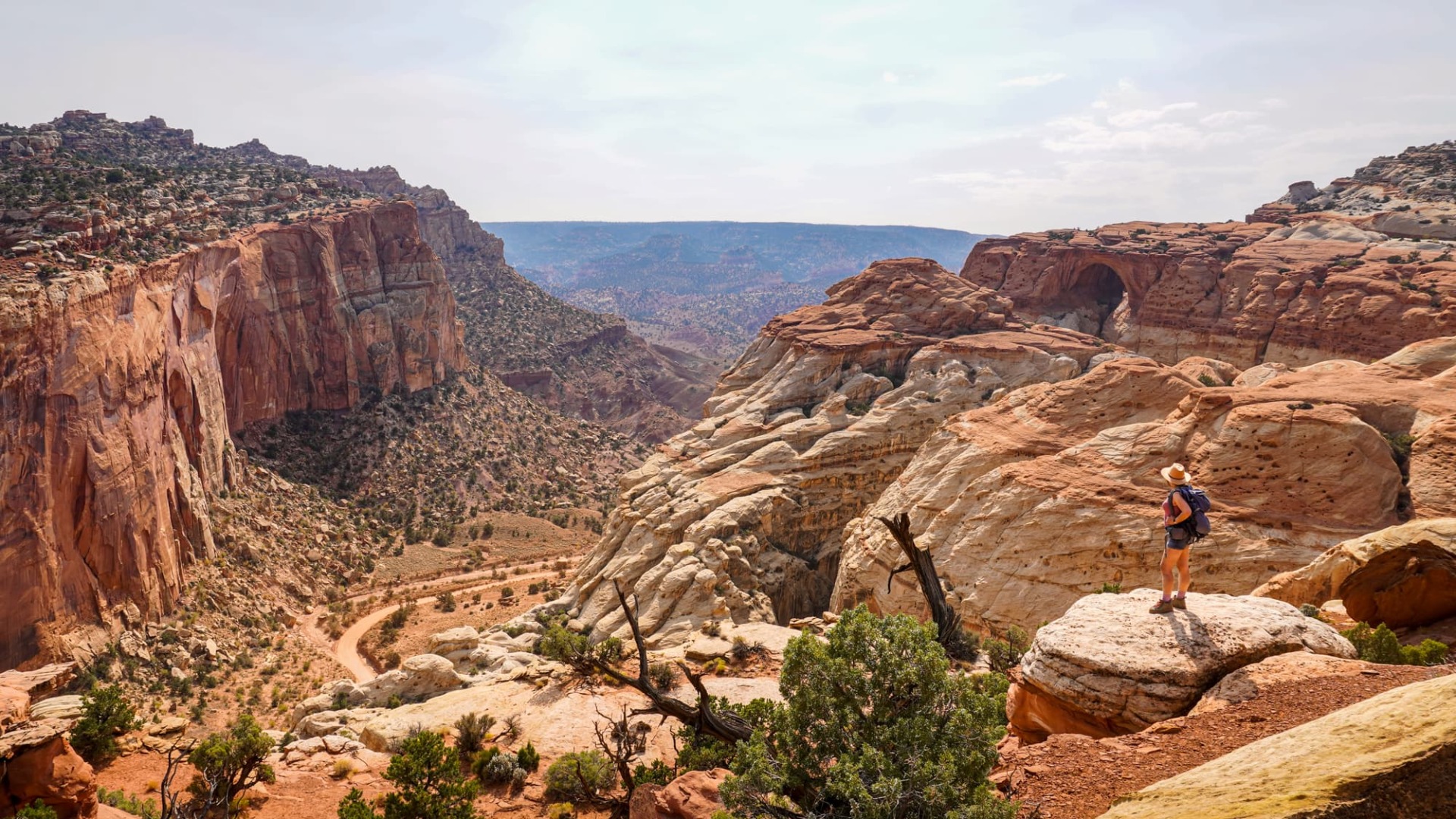
Moreover, the official website for Capitol Reef National Park calls it "a hiker's dream." There are 15 paths of varying difficulty that are all accessible in a day here. Back-country hikers may choose from a plethora of trails that lead them into tiny, winding gorges, slot canyons, and to breathtaking vistas, as the park's website puts it.
According to the park's website, "March to June and September to October are the best months to visit Capitol Reef, and with good reason: there is less likelihood of snow or severe monsoon rains, so the weather is frequently great for trekking and camping.
However, travellers are reminded to always check the forecast and road conditions, regardless of the season.
Although Capitol Reef is large enough to warrant a full day's visit, most tourists only spend half a day there. That generally leaves enough time to travel the Scenic travel, check out the Fruita Rural Historic District, listen in on a ranger presentation, and go on a few of hikes. Nevertheless, both half-day and full-day itineraries are included in the Fruita Area Map and Guide. Unlike some of the other roads in the park, the Scenic Drive is paved and spans slightly under 8 miles in length. The National Park Service also provides an app that offers a self-guided audio tour of the path.
Highway 24 and the Capitol Gorge Trail both have petroglyphs that are visible to visitors. The park claims that they were made by Indians of the Fremont Culture between a thousand and seven hundred years ago. More than 30 indigenous groups have historical links to the area.
Where is the nearest town to Capitol Reef?
Torrey, Utah, is the closest major city. The closest airport is the Grand Junction Regional Airport, which is almost three hours distant by car. If you're looking for more travel options and carriers, head to Salt Lake City International Airport, which is around 3.5 hours away.
Does driving through Capitol Reef National Park cost anything?
Everyone who enters the park must have a valid visitor's pass. Tickets are $20 for private vehicles, $15 for motorcyclists, and $10 for those who arrive by bicycle, foot, or public transportation.
source: eu.usatoday.com

Latest Articles