Trapped On the Egypt Border, Numerous Sudanese Without Travel Documents Escape Conflict
Abdel-Rahman Sayyed, his wife and their children tried to hide in their Khartoum home when fighting broke out in Sudan in mid-April.

The sounds of gunfights, explosions and warplanes could be heard throughout the 6 million-person city.
The Rapid Support Forces and the army, which was fighting for control in central Khartoum near the military headquarters, were right next to them. A shell struck their two-story house three days into the war, and much of it was reduced to rubble.
Sayyed's wife, three children, and he survived. They fled immediately from the war-torn town. Their passports were under the rubble of their house.
They are now among the tens and thousands of people who lack travel documents, trapped at Egypt's border.
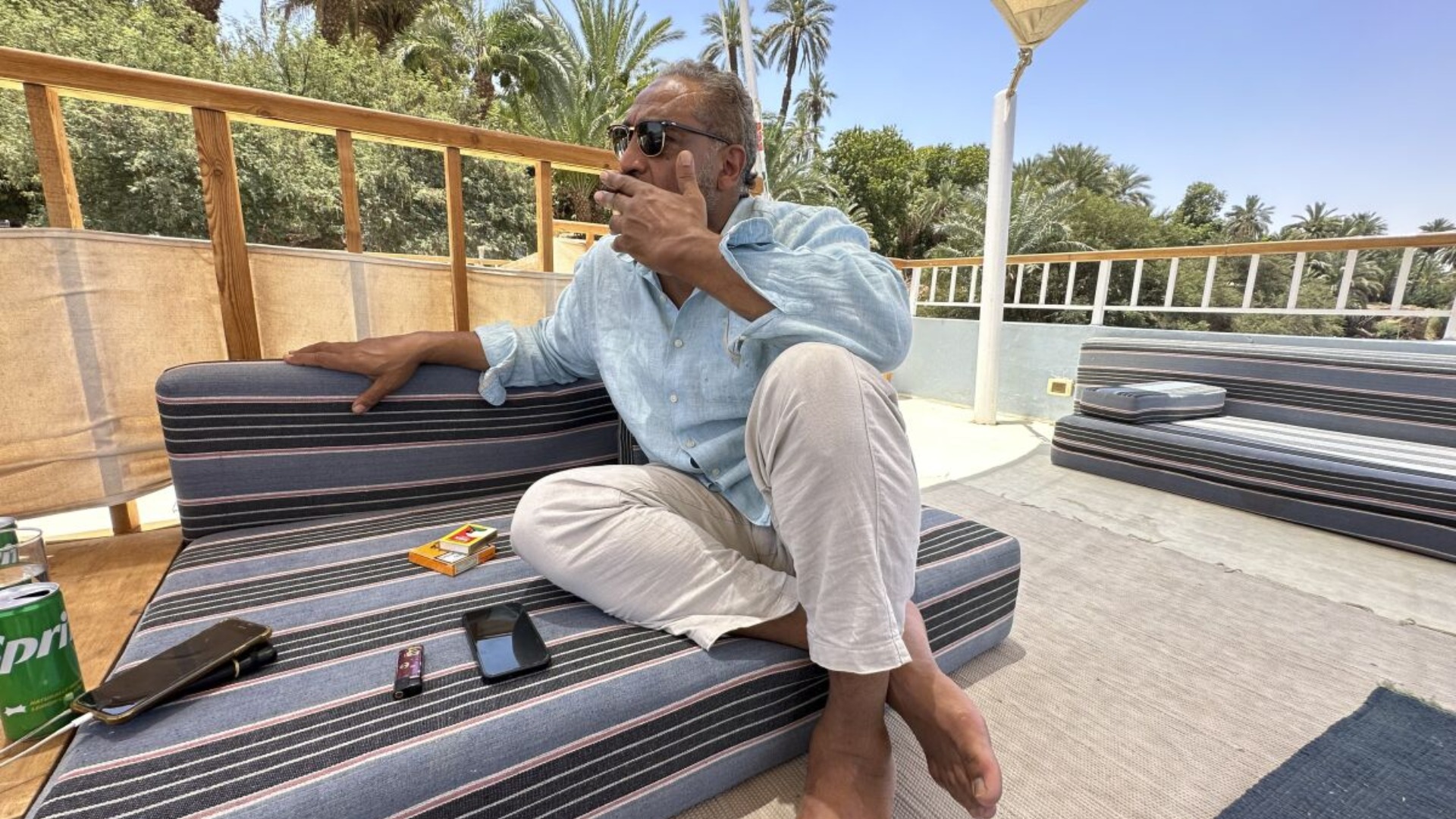
Sayyed, 38, said that he and his family narrowly avoided death in a phone interview conducted from Wadi halfa, the nearest city to the Sudanese border. He was shocked that Egyptian authorities would not let his family into the country. He said, "I thought we would be allowed in as refugees."
After two months, the clashes between the two opposing forces continue in Khartoum, and elsewhere in Sudan. Hundreds of people have died, and there is no sign that they will stop, after talks to reach a solution collapsed. According to U.N. statistics, people continue to flee in large numbers. This week, the total number displaced since April 15 increased to around 2.2 millions, up from just 1.9 million a week before. According to the U.N., of the total number of displaced people, over 500,000 crossed into neighboring nations, and the remainder sought refuge in quieter areas within Sudan.
According to a Sudanese official of migration who spoke on condition of anonymity as he was not authorized to brief the media, more than 120,000 Sudanese are stuck in Wadi halfa and its surrounding areas. Some of them have no passport, or their passport has expired or been lost in the rush to leave.
Wadi Halfa is flooded with Sudanese people, men, women, and children, who have passports, but need to apply for visas in order to cross the border. The process of getting a visa may take several days, or even more. Families are left scrambling to find food and accommodation, while many sleep in the street.
Egypt is increasingly being asked to waive its entry requirements. Sudanese-American Physician Association (SAPA), a U.S. based NGO, has called on Egypt to allow refugees to seek asylum at its borders.
Last week, the Egyptian government tightened entry requirements. Prior to last week, only Sudanese males aged 16-45 required visas for entry into Egypt. On June 10, new rules will require that all Sudanese obtain electronic visas. Ahmed Abu Zaid said that the Egyptian Foreign Ministry's measures were designed to combat visa fraud by groups from the Sudanese border.
Sayyed called the decision of June 10 a "stab in the back" for all those stuck at the border. He is one of the 14 Sudanese that fled Khartoum, without passports. He spoke with The Associated Press. They all said that they thought Egypt would relax the entry requirements for the fleeing Sudanese.
"We're forced to leave our homes," Sayyed said. "It's a war."
Other passports were stuck in foreign embassies as they applied for visas prior to the outbreak of fighting. In cases where the embassies have been evacuated in Khartoum, procedures may require that passports are destroyed to prevent them from falling into the wrong hands. In a press release, the U.S. State Department stated that they destroyed the passports that were left there "rather than leave them behind unsecured ."
"We recognize that the lack of travel documentation is a burden for those seeking to depart Sudan," it said. "We have and will continue to pursue diplomatic efforts with partner countries to identify a solution."
Sayyed and his wife arrived in Wadi halfa after a 2-day journey from Khartoum. He said he took refuge with 50 other families in a local school, who all depended on the humanitarian aid of charities and the community to survive.
Sayyed has been visiting the Sudanese Immigration Authority offices and the Egyptian Consulate at Wadi Halfa every day for five weeks. This is a routine that many others have followed in the hope of obtaining travel documents or visas.
Sayyed will have little chance unless Egypt opens its border. The main immigration office, in Khartoum which has been closed since the beginning of the war, is usually the place where new Sudanese Passports are issued. The Wadi-Halfa branch does not have access to computerized records and can only renew passports that are expired manually. It cannot issue new passports or replace lost ones.
Al-Samaul Hussein Mansour (a Sudanese-British citizen) left his travel documents behind at home during his frantic escape from the fighting that erupted in Khartoum. This was according to Ibn Sina Mansour's younger brother.
Al-Samaul, a 63-year-old pediatrician-turned-politician, didn't get to the British Embassy in Khartoum to be evacuated with other British citizens. Ibn Sina, Ibn's brother, said that he thought the clashes will stop "within a couple of days".
He then went to western Darfur, where he spent a few days with a relative. As the fighting continued, he moved toward the Egyptian border. He couldn't find a place in Wadi Halfa to stay, so he moved to Shandi.
Ibn Sina (also a British national) said that it was too risky to return to Khartoum to retrieve his documents. Street fighting continued and there were stray bullets and bombs aimed at houses.
In a recent Aswan interview, he stated that returning to Khartoum would mean death for Samaul. Aswan is the nearest Egyptian city to Sudan's border. Ibn Sina is a retired engineer who moved to Aswan to be nearer to his brother.
Three brothers from Khartoum, a city adjacent to Omdurman were also trapped. They either had no passport or lost it. Three brothers, aged 26, 21 and 18, were separated from five sisters and their parents who had all been able to enter Egypt by early May.
Salah al-Din al-Nour said, "This war displaced and separated many families like us. We have nothing to do with their struggle for power. They destroyed Sudan and the Sudanese people."
Source: apnews.com

Latest Articles