Changi Airport Deploys First Autonomous Baggage Tractors
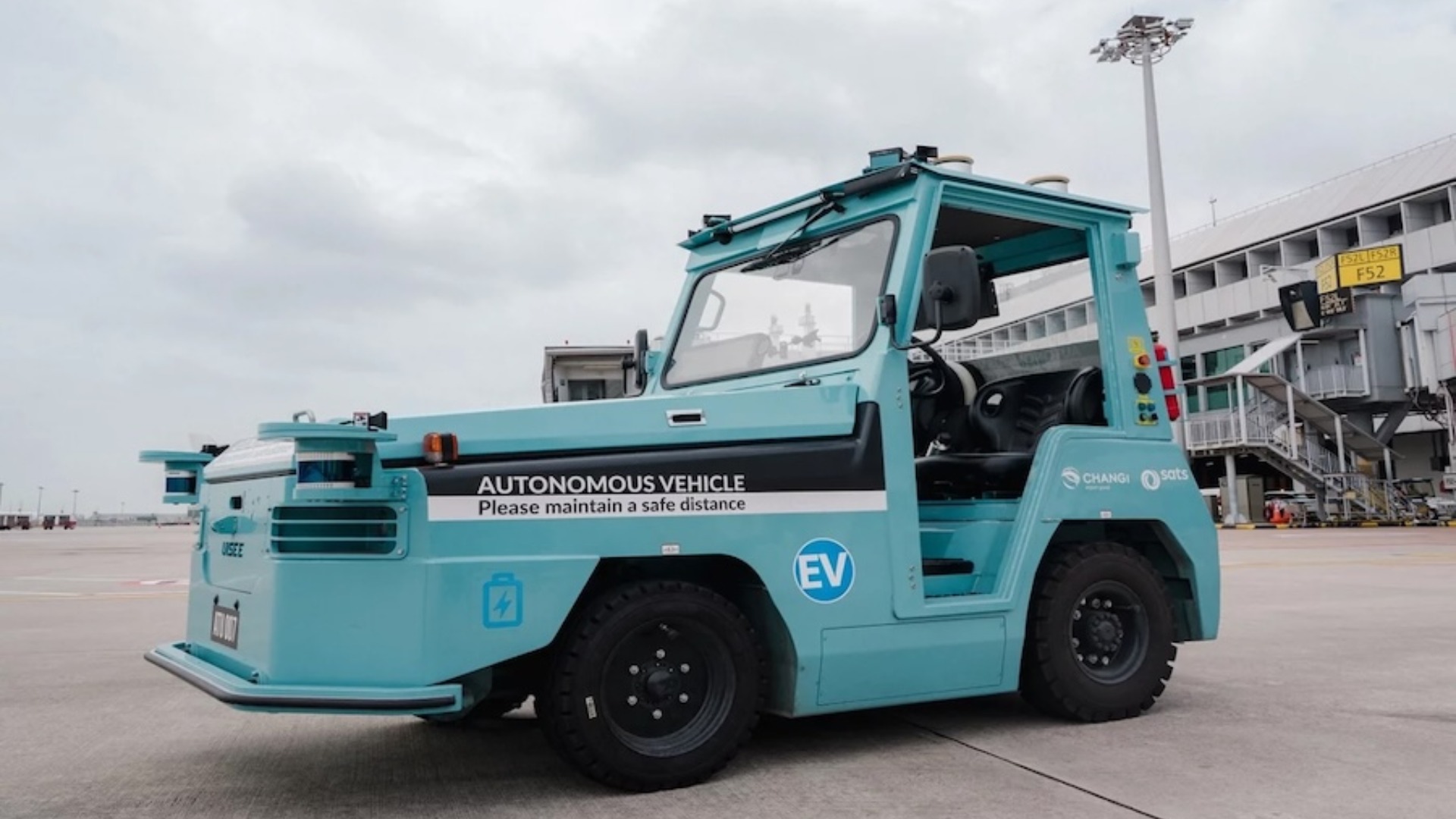
Changi Airport has begun live operations of fully autonomous baggage tractors, marking a major advancement in airside automation at the airport. The tractors are now in service transporting passenger baggage between the baggage handling areas of Terminals 1 and 4 following nearly a year of rigorous trials covering more than 5,000 test trips.

The deployment represents a significant step toward Changi’s “airside of the future” vision, using autonomous technology to raise operational efficiency, enhance safety and free up ground staff from routine driving tasks so they can focus on more complex operations.
Each autonomous tractor is equipped with multiple sensors and cameras that allow it to navigate complex airside environments safely in all conditions, including day and night. The vehicles are monitored from a control centre, where an operator can intervene if necessary to ensure secure operations.
The initial fleet of two driverless tractors will soon be expanded. A further six autonomous vehicles are planned for deployment on a separate route linking Terminal 2’s baggage handling area and aircraft stands later in 2026, with long-term plans to operate a fleet of 24 autonomous tractors by 2027. These expanded operations are expected to include towing cargo and other equipment in addition to baggage.
The project — co-funded by the Civil Aviation Authority of Singapore — aligns with Changi Airport Group’s broader strategy of integrating autonomous technology, artificial intelligence and robotics into airside operations to boost productivity and future-proof the airport as travel demand grows.
Airport officials say the transition to automated tractors will also support efforts to redesign job roles within airside operations, enabling staff to take on higher-value tasks while autonomous vehicles handle routine movement of baggage and equipment.
This deployment reinforces Singapore’s position at the forefront of aviation innovation, demonstrating how automation can enhance efficiency and reliability in one of the world’s busiest and most technologically advanced airport hubs.

Latest Articles