
Paris-Orly Airport has achieved Level 5 Airport Carbon Accreditation after reducing emissions from its own operations by 92% compared with 2010 and covering the remainder with certified carbon credits.
Announcing the milestone on October 14, 2026, Groupe ADP said the airport reached its net-zero target for operational emissions in 2025, five years ahead of its original 2030 deadline.
The achievement covers Scope 1 and 2 emissions, associated with the airport’s own activities and purchased energy. It does not mean that flights and the airport’s wider value chain have reached net zero. Paris-Orly retains a 2050 commitment covering those broader emissions.
Renewable heat helps cut operational emissions
Paris-Orly’s remaining operational emissions totalled 2,725 tonnes of CO₂ equivalent in 2025 on a market-based accounting basis, which reflects the energy contracts and suppliers selected by the operator. These emissions were covered by certified carbon credits.
According to Groupe ADP, 87% of the heat consumed at the airport in 2025 came from renewable sources. Its approach combines geothermal energy, a heat pump, recovered waste heat and biomethane guarantees of origin covering part of its natural gas consumption.
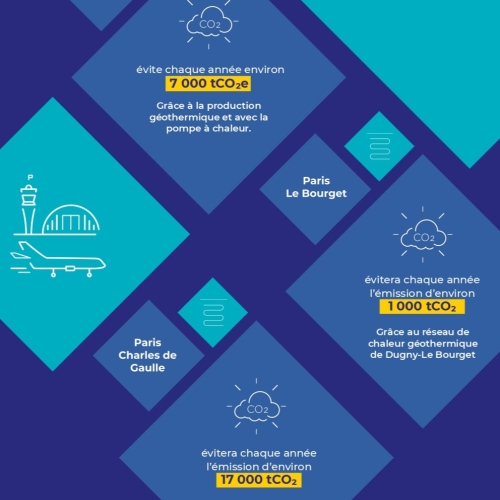
Orly’s geothermal system has operated since 2011. A heat pump added at the end of 2024 increased the system’s annual renewable heat production to approximately 36 GWh. Groupe ADP estimates that the combined installation avoids around 7,000 tonnes of CO₂ equivalent emissions each year.
Energy savings and fleet changes support the reduction
Across Groupe ADP’s facilities, electricity consumption in 2025 was approximately 16% below 2019 levels, while heat consumption fell by around 35%.
Measures introduced under its energy efficiency plan include setting winter heating to 19°C and summer air conditioning to 26°C, improving temperature controls and replacing lighting with LEDs.
The operator is also replacing vehicles with electric alternatives and using fuels such as HVO and B100 where electric equipment is not currently available. All winter operations equipment at Paris-Orly has run on HVO since October 2025.
Across its three Paris-region airports, Groupe ADP reports an average 57% reduction in vehicle fleet greenhouse gas emissions since 2010.
Geothermal projects extend to other Paris airports
The wider programme includes heating infrastructure at Paris-Charles de Gaulle and Paris-Le Bourget.
At Charles de Gaulle, a geothermal installation is expected eventually to meet just over 30% of annual heating needs. Combined with existing biomass boilers, it will bring the renewable share of the airport’s heat supply to 55%.
Paris-Le Bourget connected to the Dugny–Le Bourget geothermal district heating network in May 2026. Groupe ADP says the connection will allow its airport heating network to be up to 90% decarbonised.
Solar power and runway material reuse form next steps
Groupe ADP aims to cover 25% of its three Paris airports’ electricity needs through solar power by 2030, using long-term purchase agreements and installations on airport land.
All solar plants linked to those purchase agreements have been operational since September 2026. The operator expects them to cover more than 24% of the airports’ combined electricity needs from 2027.
Construction projects are another focus. During the resurfacing of Runway 1 at Charles de Gaulle, 259,000 tonnes of materials were recovered, with 76% reused directly on site. For the renovation of Runway 4 at Paris-Orly, the target is to recycle nearly 90% of demolition materials.
These construction-related emissions fall within Scope 3, the wider category of indirect emissions that remains part of the operator’s longer-term decarbonisation work.