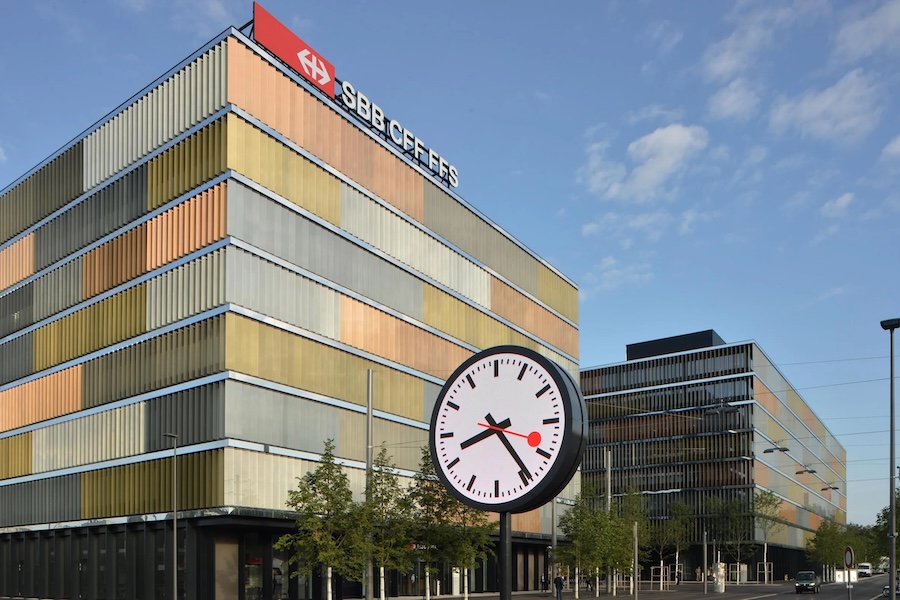

Swiss Federal Railways (SBB) recorded higher passenger numbers and a sharp improvement in profitability during the first half of 2026, as demand for rail travel continued to grow across Switzerland.
An average of 1.45 million passengers travelled on SBB trains each day during the first six months of the year, up 4% from 1.39 million in the same period of 2025.
The railway reported a first-half profit of CHF 126 million, more than double the CHF 48 million recorded a year earlier. Higher passenger demand, stronger real estate performance and a major improvement in freight operations contributed to the result.
Despite the positive performance, SBB warned that substantial investment will be required in the coming years as Switzerland’s rail network faces growing demand, an infrastructure maintenance backlog and the need to renew rolling stock.
SBB carries 1.45 million passengers per day
Passenger demand continued to increase during the first half, while customer satisfaction improved slightly from 79.9 to 80.1 points.
SBB attributed the improvement to smoother operations, better passenger information during disruptions and the provision of additional seats on particularly busy routes.
Train punctuality remained high at 94.1%, although this was 0.4 percentage points below the unusually strong performance recorded during the first half of 2025.
Infrastructure and rolling stock reliability, together with the planning of engineering works, helped maintain punctuality. Technical failures, adverse weather and delays affecting international services had a negative impact.
Safety performance remained broadly stable, although SBB highlighted growing concerns around aggression, violence and cyber threats. The operator said it is strengthening preventive measures, staff training and technical safety systems.
International rail travel continues to grow
Demand for international passenger services also increased.
A total of 6.02 million passengers used SBB’s international services during the first six months of 2026, representing year-on-year growth of 1.3%.
The company plans to continue expanding its cross-border network in cooperation with international railway partners.
Long-distance passenger services generated earnings of CHF 14 million, around CHF 3 million more than during the same period last year.
Higher demand for long-distance and international travel was partly offset by increased maintenance costs and depreciation related to SBB’s IR-Dosto double-deck trains.
Regional Services recorded a CHF 16 million loss, but this represented an improvement of CHF 23 million compared with the previous year, supported by stronger passenger demand and lower maintenance costs.
Half Fare Travelcards reach 3.53 million
Demand for SBB’s subscription products remained strong.
The number of GA Travelcards was stable at 419,000, while Half Fare Travelcards increased by 3.2% year on year to 3.53 million.
Half Fare Travelcard PLUS continued to gain users, reaching 202,000 active subscriptions by the middle of 2026. The product had just under 170,000 subscribers in 2025.
SBB profit more than doubles
SBB’s CHF 126 million first-half profit represents a substantial improvement on the CHF 48 million reported for the first six months of 2025.
Real Estate was one of the strongest contributors, with earnings increasing by CHF 29 million to CHF 176 million. SBB attributed the improvement largely to new site openings and higher footfall at railway stations.
Freight Services also recorded a major turnaround, improving its result by CHF 49 million to a CHF 2 million profit.
This represents the first break-even result for SBB’s freight business in many years.
The improvement was supported by federal subsidies for national single wagonload traffic, internal efficiency measures, transport pricing designed to cover costs and proceeds from rolling stock sales.
However, SBB stressed that its overall financial position remains challenging.
The company estimates it will need annual profits of approximately CHF 500 million in the medium term, and higher profits over the longer term, to finance fleet renewal and service expansion while keeping debt under control.
SBB Cargo to be reintegrated into the Group
SBB is also moving ahead with a major restructuring of its freight operations.
SBB Cargo AG will be financially integrated into SBB AG from January 1, 2027 and managed as the Freight Services division.
The division will also include SBB Cargo International AG, in which SBB holds a 75% stake, and wholly owned ChemOil Logistics AG.
Employees of SBB Cargo AG will transfer to SBB AG on June 1, 2027, with SBB saying the organisational change will not alter their employment conditions.
The move completes a process that began with SBB’s full acquisition of SBB Cargo AG in 2023 and is intended to simplify the organisation while bringing passenger, infrastructure and freight operations more closely together.
SBB ultimately aims to make its freight business economically self-sustaining, in line with the Swiss Confederation’s target for 2033.
Reliability, innovation and financial flexibility
Looking beyond the first-half results, SBB Chairman André Wyss has identified three strategic priorities for the railway: reliability, targeted innovation and greater financial flexibility.
Maintaining and modernising the existing rail network will take priority as infrastructure ages and passenger demand increases.
SBB argues that network expansion will still be necessary, but future projects should focus on areas delivering clear benefits to passengers while avoiding excessive long-term costs.
The company is contributing to the federal consultation surrounding Switzerland’s Transport 45 rail expansion programme, while maintaining that existing infrastructure must be adequately maintained before further expansion takes place.
Digitalisation and new technologies are expected to play an increasingly important role by helping SBB increase capacity and reliability without relying entirely on additional physical infrastructure.
“SBB is in a strong position today,” Wyss said. “Our task now is to secure that strength for the future so that the railway remains reliable, innovative and financially flexible for generations to come.”
Investment remains a major challenge
SBB’s Energy Infrastructure division generated CHF 14 million during the first half, CHF 24 million less than a year earlier, primarily due to higher energy purchases and increased grid fees.
Network Infrastructure’s mid-year result declined by CHF 5 million as personnel costs increased alongside maintenance work and major projects.
Those figures underline the investment challenge facing the railway as it balances rising passenger demand with the cost of maintaining and modernising one of Europe’s most heavily used rail networks.
For SBB, the strong first-half passenger and financial results provide a more solid starting point, but the company says maintaining reliability while financing future capacity will remain central to its strategy over the coming years.