
Copenhagen Airport reported a 43% increase in profit before tax during the first half of 2026, supported by record passenger numbers, growing transfer traffic and the sale of its stake in Smarter Airports.
Profit before tax reached DKK 851 million for the six-month period, while revenue increased 9% year-on-year to DKK 2.8 billion.
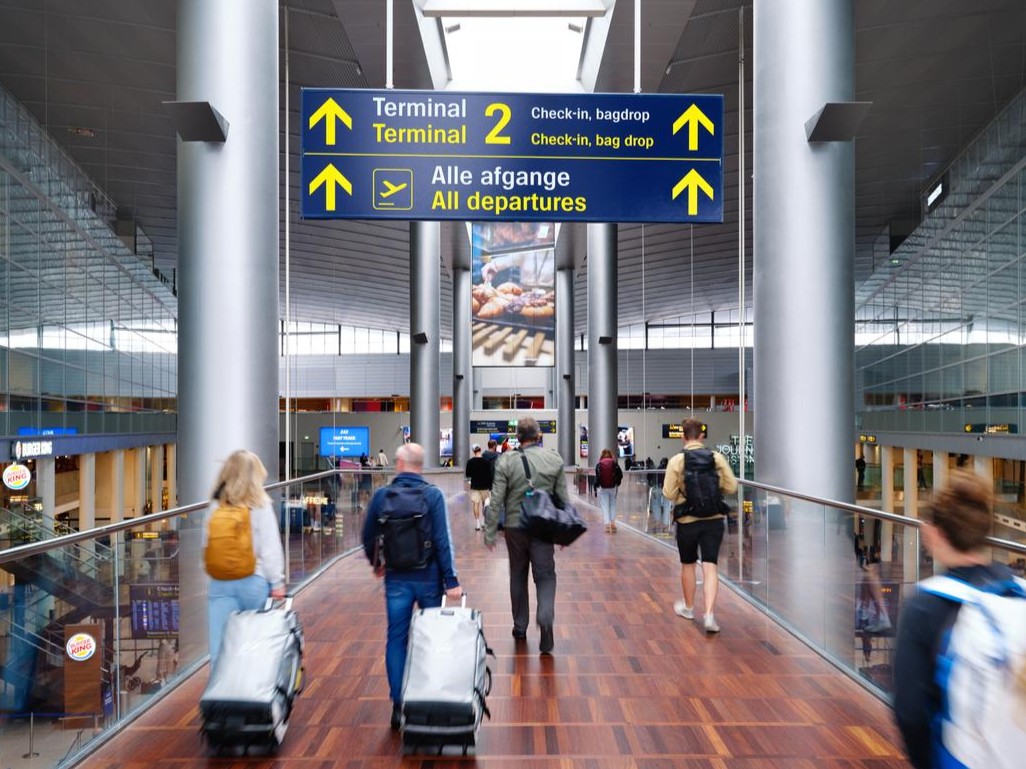
Passenger traffic also reached a new first-half record, with 16.1 million travellers passing through Copenhagen Airport between January and June, up 9% compared with the same period in 2025.
“The airport has never welcomed more passengers during a six-month period. Global demand for air travel remains strong despite rising fuel prices, and more passengers are choosing to travel via Copenhagen,” said Copenhagen Airport CEO Christian Poulsen.
The airport remains on course for a record year, although it has lowered its full-year passenger forecast amid signs that growth in travel demand is beginning to slow.
Transfer traffic grows 31%
Transfer passengers were a major driver of Copenhagen’s traffic growth during the first half of the year.
Around 4.3 million passengers connected through the airport, representing a 31% increase compared with the first six months of 2025. Transfer passengers now account for 27% of Copenhagen Airport’s total traffic.
Most connecting passengers are from Denmark, Norway and Sweden and use Copenhagen to continue to destinations elsewhere in Europe, North America and Asia. The airport is also seeing more travellers from the United States and Asia use Copenhagen as a European gateway.
“Transfer passengers account for a significant share of overall passenger growth at the airport,” Poulsen said. “Today, more than one in four passengers, or 27%, connect through Copenhagen, and this development strengthens our position as the largest aviation hub in the Nordic region.”
According to the airport, a strong transfer market is particularly important for maintaining and attracting long-haul routes that could not be supported by local demand alone.
Revenue rises to DKK 2.8 billion
Copenhagen Airport recorded an average of 710 passenger aircraft movements per day during the first half of 2026.
Aeronautical revenue increased 11% to DKK 1.721 billion, while non-aeronautical revenue rose 6% to DKK 1.05 billion.
The latter includes income generated by the airport’s shopping facilities, parking operations, hotels and property leasing.
The 43% rise in first-half profit was also boosted by Copenhagen Airport’s divestment of its stake in Smarter Airports, the company behind the Airhart IT platform developed together with Netcompany.
With Airhart now integrated into airport operations, Copenhagen Airport said it is focusing resources on its core operations and increasing capacity to accommodate future passenger growth.
Copenhagen Airport invests DKK 1.17 billion in expansion
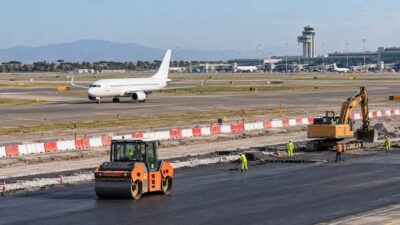
Investment reached DKK 1.167 billion during the first six months of the year as Copenhagen Airport continues a major programme to expand its infrastructure.
Projects include additional aircraft stands and increased passenger capacity within the terminals.
A new area of Terminal 3 is scheduled to open in 2027, bringing expanded passport control and baggage handling facilities as well as additional restaurants, shops, lounges and passenger areas.
The airport is also working on a longer-term planning framework following the Danish Parliament’s adoption of the Land Use Act in 2023.
Copenhagen says changes to the airport layout will be necessary to accommodate newer generations of aircraft while allowing further development of its terminal infrastructure.
Airport expands environmental monitoring
Alongside its capacity investments, Copenhagen Airport is introducing measures aimed at reducing air pollution and noise generated by airport operations.
Thermal imaging cameras and artificial intelligence are being used to monitor whether aircraft auxiliary power units remain switched off while planes are parked. Aircraft at Copenhagen can instead use the airport’s central electricity and ventilation systems.
The airport is also replacing petrol and diesel vehicles and ground equipment with electric alternatives. By 2025, 41% of its vehicle fleet had been converted to electric power, while vehicles without a suitable electric alternative have been using HVO biodiesel since last year.
In spring 2026, Copenhagen Airport installed 18 sensors to continuously monitor ultrafine particles, particularly around aircraft stands. Data from sensors located closest to neighbouring communities is expected to be made publicly available before the end of 2026.
Middle East traffic falls 30%
While overall passenger numbers increased, geopolitical tensions had a significant impact on Copenhagen’s Middle East routes.
Around 310,000 passengers travelled between Copenhagen and Middle Eastern destinations during the first half of 2026, a decline of 140,000 passengers, or 30%, compared with the previous year.
Many services were initially suspended following the escalation of the crisis before most airlines resumed operations at reduced frequencies.
The situation has also contributed to higher crude oil and aviation fuel prices. Copenhagen Airport said the increase has so far had limited impact on overall traffic, although some airlines have reduced frequencies on routes offering multiple daily departures.
Copenhagen raises 2026 profit forecast despite lower passenger outlook
Copenhagen Airport now expects approximately 34.5 million passengers in 2026, lowering its previous forecast of 35.5 million as the pace of travel demand growth moderates.
The revised figure would still represent a substantial increase from the 32.4 million passengers handled in 2025.
Revenue is expected to grow by around 7% for the full year.
Despite lowering its passenger forecast, Copenhagen Airport has raised its expected profit before tax, partly because of the financial impact of the Smarter Airports divestment.
The airport now forecasts 2026 profit before tax of between DKK 1.80 billion and DKK 1.95 billion, compared with its previous guidance of DKK 1.75 billion to DKK 1.90 billion.
The company cautioned that geopolitical developments and wider macroeconomic conditions remain significant sources of uncertainty for both passenger demand and its financial performance.